-
Jul 14,2026
Power Quality Insights In modern power systems, sensitive equipment and continuous operations are more vulnerable than ever to power disturbances. Among these disturbances, voltage sag is one of the most common and impactful. Although often brief, voltage sags can cause costly downtime, data loss, and even damage to critical equipment. In this blog, we'll explore what voltage sags are, their cause...
read more
-
Jul 16,2026
In industrial production, enterprises often face two major challenges: fluctuating production efficiency and persistently high electricity costs. Most of the time, managers attribute these problems to aging equipment and improper operation by personnel, overlooking a hidden killer lurking in the power system—harmonics. As "electrical pollution" in the power system, harmonics not only directly incr...
read more
-
Jul 22,2026
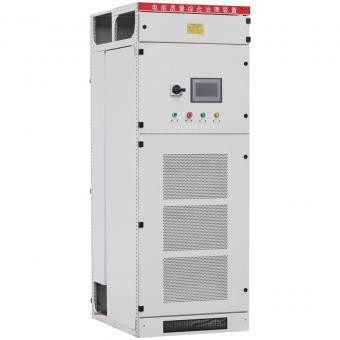
In high and low voltage power systems, grid integration of new energy sources and impact loads tend to trigger complex reactive power issues, such as continuous power fluctuations and harmonic superposition. With power electronic topology and real-time dynamic regulation, SVG reactive power compensation cabinets deliver precise full-range reactive power management, making them special core equipme...
read more
-
Jul 28,2026
Introduction With the rapid development of modern industries, electrical loads are becoming increasingly complex, bringing higher requirements for power quality, energy efficiency, and grid stability. High voltage capacitor cabinets have become an essential solution for improving power factor, reducing reactive power losses, and optimizing the performance of power distribution systems. The high vo...
read more
-
Jul 30,2026
I. Generation of Harmonics In power systems, the fundamental cause of harmonics is the presence of non-linear loads. When current flows through a load and does not maintain a linear relationship with the applied voltage, a non-sinusoidal current is formed, resulting in the generation of harmonics within the circuit. Due to the switching operations of semiconductor thyristors and the non-linear cha...
read more
-
Aug 06,2026
In power distribution systems, capacitor banks compensate for the reactive power generated by inductive loads using parallel-connected low-voltage power capacitors; this improves the power factor, reduces line losses, and avoids utility company penalties. However, a common misconception exists: the belief that the more capacitors are engaged—and the higher the resulting power factor—the better. In...
read more
-
Aug 13,2026
1.Why is reactive power compensation necessary? Reactive power is by no means useless power. In AC power supply systems, inductors and capacitors serve as essential loads. Ferromagnetic loads—such as electric motors and transformers—cannot function without inductive reactive power for excitation; meanwhile, long-distance transmission lines possess inherent capacitive characteristics, effectively a...
read more
-
Aug 13,2026
In modern power systems, reactive power compensation is widely used to improve power factor, reduce line losses, and increase the efficiency of electrical equipment. However, when the power source is a diesel generator, gas generator, or other synchronous generator, pursuing an extremely high power factor is not always a good idea. At first glance, a power factor close to 1.00 seems ideal. But for...
read more
-
Aug 19,2026
In power quality management, different voltage levels often require different harmonic mitigation strategies. In low-voltage systems, Active Harmonic Filters (AHFs) are widely used because they offer flexible and precise harmonic compensation. However, when it comes to medium- and high-voltage power systems, passive Filter Capacitor (FC) systems remain a more common and practical solution. So, why...
read more
-
Aug 26,2026
Variable Frequency Drives (VFDs) have become essential in modern industrial systems. They provide accurate motor speed control, reduce mechanical stress, and can significantly improve energy efficiency. However, there is another side of VFD technology that is often underestimated: harmonic distortion. In low-voltage distribution systems, a large number of VFDs can become an important source of har...
read more
-
Aug 28,2026
With the advancement of industrial automation technology, variable frequency drives (VFDs) are becoming increasingly widespread, garnering growing acclaim for their excellent speed-regulation capabilities and significant energy-saving effects. However, the harmonics generated during their operation pose an increasingly serious threat to the power grid; consequently, the need to suppress harmonic i...
read more
-
Sep 02,2026
In low-voltage power factor correction systems, detuned reactors are widely used together with capacitor banks to prevent harmonic amplification and protect capacitors. Among the most common configurations, 7% and 14% detuned reactors serve different purposes and require different capacitor specifications. A 7% detuned reactor typically creates a tuning frequency of approximately 189 Hz in a 50 Hz...
read more