In modern power systems, sensitive equipment and continuous operations are more vulnerable than ever to power disturbances. Among these disturbances, voltage sag is one of the most common and impactful. Although often brief, voltage sags can cause costly downtime, data loss, and even damage to critical equipment.
In this blog, we'll explore what voltage sags are, their causes and impacts, and the most effective mitigation solutions.
A voltage sag (also known as a voltage dip) is a short-duration decrease in RMS voltage at the power frequency, typically between 10% and 90% of the nominal voltage, lasting from 0.5 cycles to 1 minute, as defined in IEEE Std 1159-2019.
Voltage sags are typically caused by events that draw large amounts of current from the system or temporarily reduce the system voltage. The most common causes include:
Short-circuit faults
Faults on the utility system or within the facility.
Motor starting
Large inductive motors draw high inrush current during startup.
Transformer energization
High magnetizing inrush current occurs when transformers are switched on.
Load switching
Sudden changes in load conditions can momentarily reduce system voltage.
Fault clearing
Protective devices clearing electrical faults can also create temporary voltage sags.
Voltage Sag: From Disturbance to SolutionCauses
Voltage Sag EventTypical characteristics:
Impacts
Mitigation Solutions
|
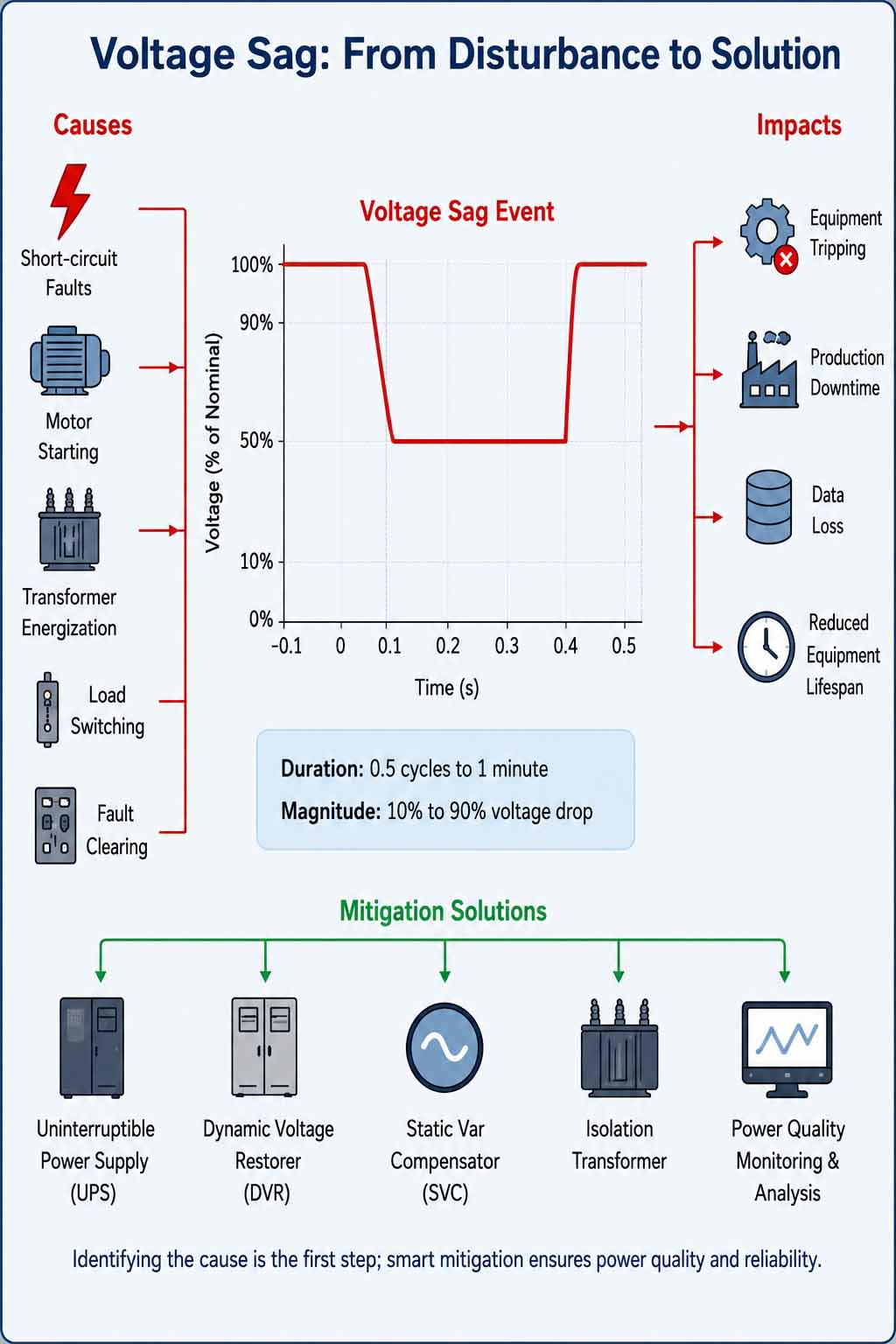 |
Although voltage sags last only a short time, they can significantly affect industrial and commercial operations.
Sensitive devices such as PLCs, variable frequency drives (VFDs), relays, and control systems may trip or malfunction.
Unexpected equipment shutdowns interrupt production processes, reduce productivity, and increase operational costs.
In data centers and IT systems, voltage sags may cause data corruption, communication failures, or complete data loss.
Repeated voltage sag events place additional stress on electrical equipment, accelerating aging and reducing long-term reliability.
The good news is that voltage sags can be minimized or mitigated with appropriate solutions.
Provides short-term backup power to sensitive loads during voltage disturbances.
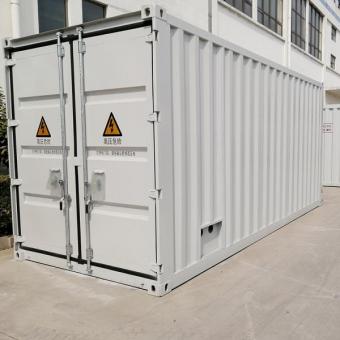
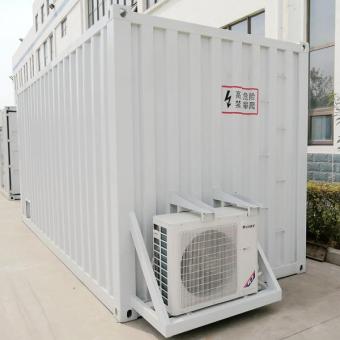
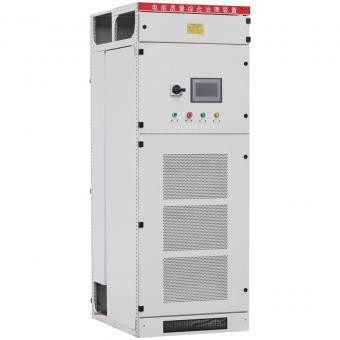
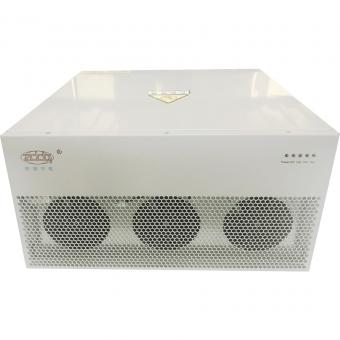
Injects compensating voltage in series with the supply to maintain stable voltage during a sag.
Supports system voltage by providing fast reactive power compensation.
Includes adequate system capacity, equipment coordination, short-circuit level management, and proper protection settings.
Continuous monitoring helps identify voltage sag events, analyze trends, and implement proactive maintenance strategies.
Categories
new blog


NO.25,JINHE RD,HUAIYUAN ECONOMIC DEVELOPMENT ZONE ,BENGBU,ANHUI
Scan to WhatsApp: