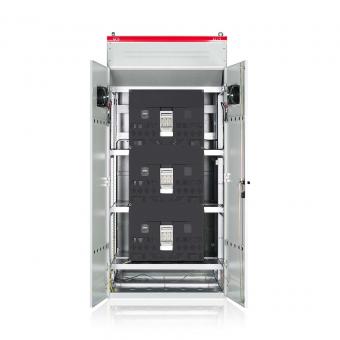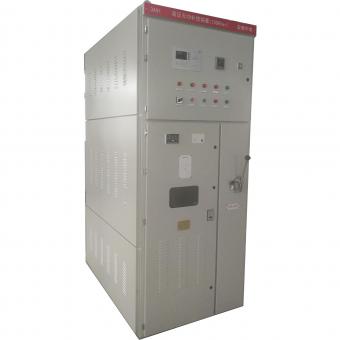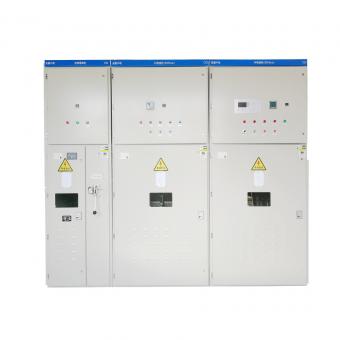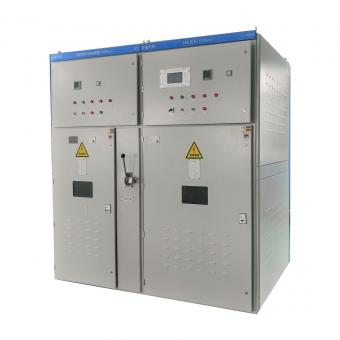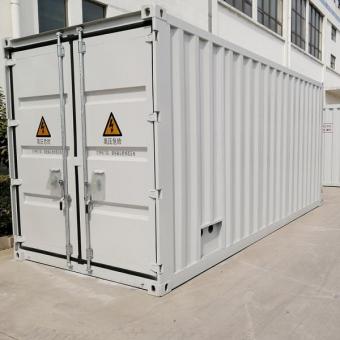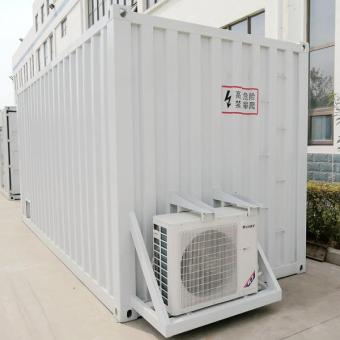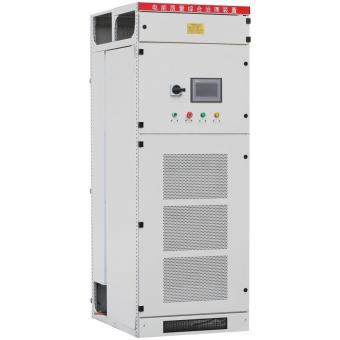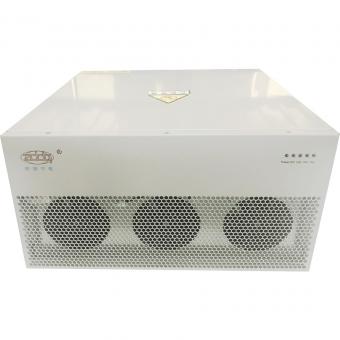
SVG for reactive power compensation offers a wide range of power quality improvement measures, including reactive power compensation, harmonic suppression, mitigation of voltage fluctuation and flicker, and resolution of three-phase unbalance.
Equipment used for reactive power compensation and harmonic control, such as passive power filters, features both reactive power compensation and voltage regulation functions. Custom design is generally required according to the parameters of harmonic sources, electrical characteristics at the installation point and user requirements.
SVG for reactive power compensation serves as a critical device for comprehensively controlling voltage fluctuation & flicker, harmonics and voltage unbalance.
Active Power Filter (APF) is a new type of power electronic equipment for dynamically suppressing harmonics and compensating reactive power. It compensates harmonic and reactive currents with variable frequency and amplitude, and is mainly applied in low-voltage power distribution systems.
The development of SVG for reactive power compensation has gone through several stages: synchronous condenser regulation → switched fixed capacitors → static var compensators → static var generators.
Based on differences in structural principles, the technologies adopted by Static Var Generator (SVG) for reactive power compensation are categorized into: self-saturated reactor type, thyristor phase-controlled reactor type, thyristor-switched capacitor type, high-impedance transformer type and excitation control type.
With the development and improvement of power electronic technology, especially high-power switching device technology, more advanced SVG for reactive power compensation are still under research and development at home and abroad.
Although still in the development and trial operation stage and not yet commercialized, SVG for reactive power compensation will be more and more widely applied in power systems by virtue of its superior performance characteristics.
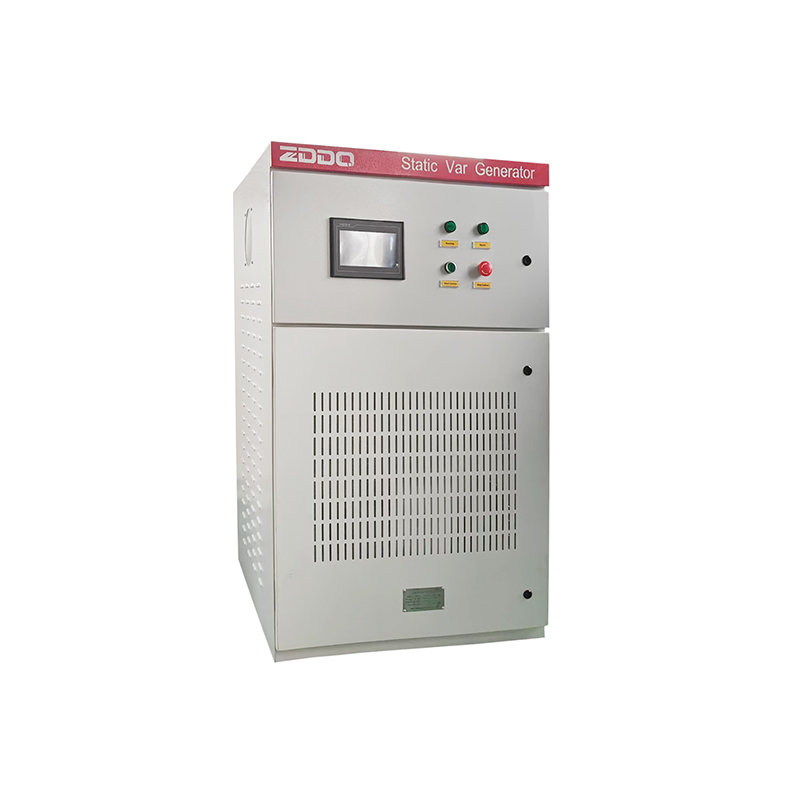
SVG for reactive power compensation is a typical power electronic device. It consists of three basic functional modules: detection module, control & calculation module and compensation output module.
Its working principle: Current information of the system is detected by external CTs. The control core then analyzes the acquired current data including power factor (PF), apparent power (S), reactive power (Q), etc. Afterwards, the controller outputs compensation drive signals, and the inverter circuit composed of power electronic inverters generates compensation current.
SVG adopts a self-commutated bridge circuit built with turn-off power electronic devices (IGBTs), which is connected in parallel to the power grid via reactors. By properly adjusting the amplitude and phase of the output voltage on the AC side of the bridge circuit, or directly regulating its output voltage, the AC-side current can rapidly absorb or release the required reactive power, so as to realize fast dynamic adjustment of reactive power.
As an active compensation device, SVG can track inrush current of impact loads, as well as track and compensate harmonic current.
The voltage source inverter consists of a DC capacitor and an inverter bridge. The inverter bridge is made up of turn-off semiconductor devices IGBT.
During SVG operation, adjusting the switching state of IGBTs inside the inverter bridge enables control over the amplitude and phase of the DC-to-AC converted voltage. Therefore, the whole equipment acts like a phase-adjustable power source. By detecting the reactive power demand of the system, it can rapidly output reactive power with equal amplitude and opposite phase, achieving on-site reactive power balance and maintaining the system operating at a high power factor.
SVG features continuous, smooth and linear reactive power compensation capability. It can replace traditional switched capacitor banks. Any target power factor value can be set. It is capable of both inductive and capacitive reactive power compensation.
SVG has remarkable advantages such as high power density, high efficiency, low cost and low noise. Adopting parallel, pluggable modular design, it has compact structure and flexible configuration. It can be used as a standard component for power distribution systems and supports embedding into third-party cabinets.
SVG reactive power compensation equipment provides a broad range of power quality improvement solutions, including reactive power compensation, harmonic suppression, reduction of voltage fluctuation and flicker, and mitigation of three-phase unbalance. Devices for reactive power compensation and harmonic control, such as passive power filters, have both reactive power compensation and voltage regulation functions. Custom design is generally required according to the parameters of harmonic sources, electrical characteristics at the installation site and user requirements. SVG reactive power compensation equipment is vital for integrated control of voltage fluctuation & flicker, harmonics and voltage unbalance.
Active Power Filter (APF) is a new type of power electronic device for dynamic harmonic suppression and reactive power compensation. It compensates harmonic and reactive currents with variable frequency and amplitude, and is mainly applied in low-voltage power distribution systems.
The development of SVG reactive power compensation equipment has gone through several stages: synchronous condenser regulation → switched fixed capacitors → static var compensators → static var generators.
Based on different structural principles, the technologies adopted by SVG reactive power compensation equipment are classified into self-saturated reactor type, thyristor phase-controlled reactor type, thyristor-switched capacitor type, high-impedance transformer type and excitation control type.
With the development and improvement of power electronic technology, especially high-power switching device technology, more advanced SVG reactive power compensation equipment is still under development at home and abroad. Although still in the development and trial operation phase, it has not yet been commercialized. Thanks to its superior performance features, SVG reactive power compensation equipment will gain increasingly wide applications in power systems.
The characteristics of SVG reactive power compensation equipment are listed below:
SVG reactive power compensation devices shall be installed wherever low-voltage transformers are fitted and beside large electrical equipment, especially in industrial and mining areas, enterprises and residential districts with low power factor.
SVG is particularly suitable for large asynchronous motors, transformers, welding machines, punch presses, lathe groups, air compressors, presses, cranes, smelting equipment, steel rolling mills, aluminum rolling mills, large switches, electric irrigation equipment, electric locomotives, etc.
Categories
new blog


NO.25,JINHE RD,HUAIYUAN ECONOMIC DEVELOPMENT ZONE ,BENGBU,ANHUI
Scan to WhatsApp: