The Importance of Harmonic Mitigation for Power Quality
Jul 30,2026
I. Generation of Harmonics
In power systems, the fundamental cause of harmonics is the presence of non-linear loads. When current flows through a load and does not maintain a linear relationship with the applied voltage, a non-sinusoidal current is formed, resulting in the generation of harmonics within the circuit. Due to the switching operations of semiconductor thyristors and the non-linear characteristics of diodes and thyristors, the waveforms of certain power system equipment—such as power converters—deviate significantly from a pure sine wave.
1. Power Grid and Power Supply Equipment
In power systems, the fundamental cause of harmonics is the presence of non-linear loads. When current flows through a load and does not maintain a linear relationship with the applied voltage, a non-sinusoidal current is formed, resulting in the generation of harmonics within the circuit. Regarding generators, due to factors such as the difficulty of achieving absolute symmetry in three-phase windings and perfect uniformity in the iron core, some harmonics are inevitably generated, though generally in small amounts. In transmission and distribution systems, power transformers are the primary source of harmonics. Due to core saturation and the non-linearity of the magnetization curve—combined with economic design considerations that place the operating magnetic flux density near the saturation region of the curve—the magnetizing current takes on a peaked waveform, thereby containing odd-order harmonics. The magnitude of these harmonics depends on the magnetic circuit structure and the degree of core saturation; the higher the saturation level and the further the operating point deviates from linearity, the greater the harmonic current becomes (with the third-order harmonic current reaching up to 0.5% of the rated current).
2. Power-Consuming Equipment
(1) Thyristor Rectifier Equipment: As thyristor rectification finds increasingly widespread application in areas such as electric locomotives, aluminum electrolytic cells, charging devices, and switching power supplies, it introduces significant harmonic content into the power grid. (2) Variable-frequency drive (VFD) devices: These are commonly used in equipment such as fans, pumps, and elevators. Due to the use of phase control, their harmonic composition is complex, containing not only integer-order harmonics but also fractional-order harmonics. These devices generally have high power ratings, and as their usage increases, so does the harmonic pollution injected into the power grid.
(3) Electric arc furnaces and calcium carbide furnaces: During the heating of raw materials, the three-phase electrodes of the furnace struggle to make simultaneous contact with the uneven furnace charge. This leads to unstable combustion and three-phase load imbalance, generating harmonic currents that are injected into the grid through the transformer's delta-connected windings. These harmonics are primarily of the 2nd to 7th orders, averaging 8%–20% of the fundamental frequency, with peaks reaching up to 45%.
(4) Gas-discharge light sources: Fluorescent lamps, high-pressure mercury lamps, high-pressure sodium lamps, and metal-halide lamps fall into this category. Analysis and measurement of their voltage-current (V-I) characteristics reveal severe nonlinearity; some even exhibit negative differential resistance characteristics. They inject odd-order harmonic currents into the power grid.
(5) Household appliances: Devices such as televisions, video recorders, computers, dimmable lighting, and temperature-controlled cooking appliances contain voltage-regulating and rectifying circuits that generate significant odd-order harmonics. In appliances with windings—such as washing machines, electric fans, and air conditioners—fluctuations in unbalanced currents can also distort the waveform. Although individual power consumption is low, the sheer volume of these appliances makes them a major source of harmonics.
II. Harmful Effects of Harmonics
1、Increased power operating costs for enterprises
Since harmonics do not dissipate naturally without mitigation, large amounts of harmonic voltage and current circulate and accumulate within the grid. This leads to increased line losses and overheating of electrical equipment, thereby raising power operating costs and electricity expenditures.
2、Reduced power supply reliability
In many cases, harmonic voltages cause the sinusoidal waveform to become more peaked. This not only increases hysteresis and eddy-current losses in electrical equipment—such as transformers and capacitors—but also subjects insulation materials to greater electrical stress. Harmonic currents increase copper losses in transformers; consequently, under heavy harmonic loads, transformers experience localized overheating and increased noise. This accelerates insulation aging, significantly shortens the service life of transformers and motors, reduces power supply reliability, and creates a high risk of power outages during production.
3. Triggering power supply accidents
Power grids contain numerous harmonic sources (such as variable-frequency drives or rectifiers) alongside loads like power capacitors, transformers, cables, and motors. These electrical devices are subject to frequent operational changes, making them highly susceptible to forming series or parallel resonance conditions. When grid parameters align unfavorably, harmonic oscillations can occur at specific frequencies, generating overvoltage or overcurrent that endangers the safe operation of the power system; without mitigation, this can easily lead to transmission and distribution accidents.
4. Causing equipment malfunction
For rotating generators and motors, harmonic currents or voltages induce additional losses in stator windings, rotor circuits, and iron cores, thereby reducing the efficiency of power generation, transmission, and utilization equipment. More critically, harmonic oscillations can induce oscillatory torque in steam turbine generators, potentially triggering mechanical resonance; this can cause twisting and fatigue cycling in turbine blades, rendering the equipment unable to operate normally.
5. Interfering with the normal operation of communication systems
When transmission lines run parallel to or in close proximity to communication lines, electrostatic and electromagnetic induction create electric and magnetic field coupling. Harmonic components generate audio-frequency interference within the communication system, degrading signal transmission quality and disrupting normal signal flow. This not only impairs call clarity but, in severe cases, poses a threat to both communication equipment and personal safety.
7. Reducing product quality
The persistent presence of harmonics increases vibration in equipment such as motors, leading to greater production errors, reduced machining precision, and ultimately, lower product quality.
III. Approaches and Methods for Harmonic Mitigation
1. Approaches to Harmonic Mitigation
(1) Centralized Mitigation: Filters are installed on the low-voltage busbar or at the branch circuits feeding harmonic-generating loads to provide unified mitigation.
(2) Distributed (Point-of-Load) Mitigation: Mitigation is applied directly at the power supply lines of the harmonic-generating loads. This approach targets specific equipment, addressing harmonics exactly where they originate.
2. Harmonic Mitigation Methods
(1) Passive Filters
An LC series filter, composed of an inductor and a capacitor connected in series, features a series resonance point with very low impedance. By designing a series filter with a resonance point tuned to the power line frequency and connecting it in series within the circuit, all harmonics can be filtered out.
(2) Active Filters
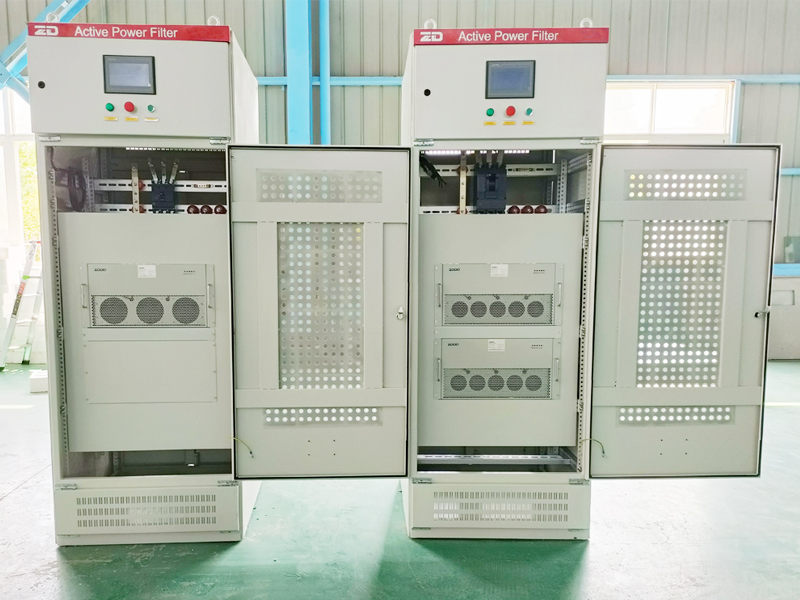
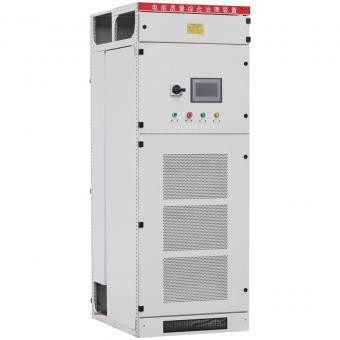
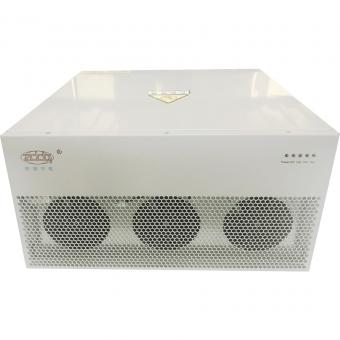
An Active Power Filter (APF) is a modern power electronic device used for the dynamic suppression of harmonics and the compensation of reactive power. It is capable of compensating for harmonics and reactive power that vary in both magnitude and frequency. Utilizing active filters enhances the stability of communication and power distribution systems, extends the service life of communication and electrical equipment, and ensures that power distribution systems comply with design standards regarding harmonic environments.