In industrial production, enterprises often face two major challenges: fluctuating production efficiency and persistently high electricity costs. Most of the time, managers attribute these problems to aging equipment and improper operation by personnel, overlooking a hidden killer lurking in the power system—harmonics. As "electrical pollution" in the power system, harmonics not only directly increase enterprises' electricity costs but also cause equipment failures and production interruptions, becoming a key factor restricting efficiency improvements. Today, we will start with the nature and hazards of harmonics, and, combined with practical experience, provide enterprises with actionable solutions.
In industrial settings, over 90% of harmonics originate from equipment such as frequency converters, rectifiers, electric arc furnaces, and UPS power supplies. These devices are widely used in manufacturing, metallurgy, and chemical industries, making them the main "sources of harmonic pollution."
Harmonics are not "harmless fluctuations," but rather can have a systemic impact on a company's production and operations. Their harm can be summarized into four core dimensions:
1.This directly drives up electricity costs, quietly eroding corporate profits.
Equipment losses: In a harmonic environment, transformers, motors, and other equipment experience a significant increase in core losses (eddy current and hysteresis losses) and copper losses, leading to severe overheating and decreased efficiency. For example, a car parts factory experienced a drop in motor efficiency from 92% to 85% due to harmonic effects, resulting in an additional monthly electricity cost of over 1500 USD.
Harmonics can cause "chronic damage" to electrical equipment, shortening its lifespan and even triggering sudden malfunctions:
Capacitor burnout: Capacitors have extremely low impedance to high-order harmonics, making them prone to concentrated harmonic current surges, leading to overcurrent and overvoltage. In one electronics factory, the superposition of fifth harmonics caused all reactive power compensation capacitors to bulge and burn out within 30 minutes, directly causing a 4-hour production line shutdown.
Transformer failure: Harmonics intensify transformer core vibration, increase noise, and accelerate the aging of insulation materials.
Motor failure: Harmonic currents generate additional torque in the motor stator and rotor, leading to increased motor vibration, noise, and accelerated bearing wear. In one food processing plant, the conveyor belt motor's bearing replacement cycle was shortened from 6 months to 2 months due to long-term exposure to third harmonics, doubling maintenance costs.
Communication interruptions: Harmonics interfere with communication lines through electromagnetic induction. In one oilfield, a pipeline monitoring system experienced data transmission interruption due to harmonic interference, preventing real-time pressure monitoring and nearly causing a pipeline leak.
2.End-point mitigation: Using specialized equipment to cancel existing harmonics.
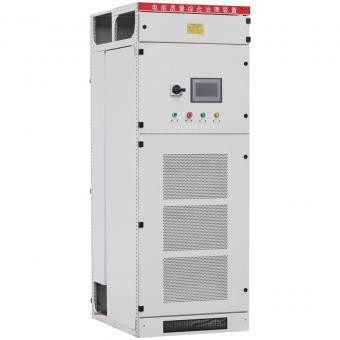
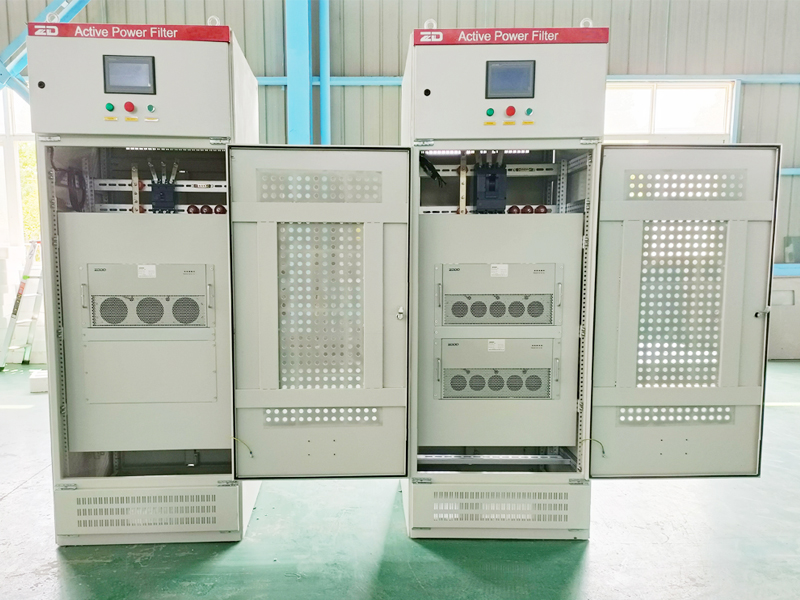
Active Power Filter (APF): Fast response and wide filtering range, suitable for scenarios with large load fluctuations and complex harmonics (such as automotive welding workshops). APF can detect harmonic currents in real time and actively output reverse current to cancel harmonics. Data shows that the harmonic mitigation rate of APF can reach over 95%.
Categories
new blog


NO.25,JINHE RD,HUAIYUAN ECONOMIC DEVELOPMENT ZONE ,BENGBU,ANHUI
Scan to WhatsApp: