-
Apr 24,2026
Reactive Power Compensation Solution for Chemical Plants 1. Problem Background and Requirements Chemical plants typically operate numerous inductive loads, such as large motors (pumps, compressors, fans), transformers, variable frequency drives, and electric arc furnaces. During operation, these devices consume significant amounts of reactive power (Q), leading to the following issues: Low power f...
read more
-
Apr 30,2026
Is there a hidden trick in the electricity bill? The secret path to saving 30% on losses by improving the power factor from 0.7 to 0.95. I.The Impact, Benefits, and Improvement Principles of Power Factor: A building materials factory incurred an annual electricity cost overrun of 500,000 yuan due to a power factor of only 0.7—this is not an isolated case! During power supply, the user's power fact...
read more
-
May 08,2026
1.What is Harmonics? In power systems, the fundamental cause of harmonics is the presence of non-linear loads. When current flows through a load and does not maintain a linear relationship with the applied voltage, a non-sinusoidal current is formed, meaning harmonics are generated in the circuit. Harmonic frequencies are integer multiples of the fundamental frequency. As proven by the French math...
read more
-
May 25,2026
1. Introduction Three-phase unbalance is a prevalent power quality issue in low-voltage distribution systems, mainly caused by dispersed single-phase loads, charging piles and residential electricity consumption. Two mainstream solutions are widely used in the industry: mechanical relay phase-switching balancers and IGBT-based active compensation devices (SVG/APF/Active Load Balancer). This articl...
read more
-
Jun 18,2026
Choose the right one, not the most expensive one. This principle also applies to reactive power compensation. In the power industry's reactive power compensation process, the selection of high-voltage reactive power compensation equipment has always been crucial. Today, we'll discuss the applicable scope of high-voltage reactive power compensation equipment. In the context of reactive power compen...
read more
-
Jun 23,2026
Understanding Four-Quadrant Reactive Power Compensation Controller The four-quadrant reactive power compensation controller solves this pain point with full-range PQ vector detection. It accurately distinguishes four operating modes: grid supply with inductive loads, grid supply with capacitive loads, on-site power generation with inductive reactive power, and grid feedback with capacitive reactiv...
read more
-
Jul 03,2026
Many charging station operators have a question: when charging piles are charging normally, the power factor is perfectly within the standard range, and there are no problems even without capacitor banks or SVG. However, when the station is newly built, there is little traffic, or there is no one charging at night, the power factor inexplicably exceeds the standard, resulting in power factor adjus...
read more
-
Jul 14,2026
Power Quality Insights In modern power systems, sensitive equipment and continuous operations are more vulnerable than ever to power disturbances. Among these disturbances, voltage sag is one of the most common and impactful. Although often brief, voltage sags can cause costly downtime, data loss, and even damage to critical equipment. In this blog, we'll explore what voltage sags are, their cause...
read more
-
Jul 22,2026
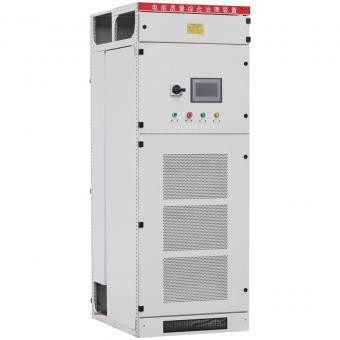
In high and low voltage power systems, grid integration of new energy sources and impact loads tend to trigger complex reactive power issues, such as continuous power fluctuations and harmonic superposition. With power electronic topology and real-time dynamic regulation, SVG reactive power compensation cabinets deliver precise full-range reactive power management, making them special core equipme...
read more
-
Jul 28,2026
Introduction With the rapid development of modern industries, electrical loads are becoming increasingly complex, bringing higher requirements for power quality, energy efficiency, and grid stability. High voltage capacitor cabinets have become an essential solution for improving power factor, reducing reactive power losses, and optimizing the performance of power distribution systems. The high vo...
read more
-
Aug 06,2026
In power distribution systems, capacitor banks compensate for the reactive power generated by inductive loads using parallel-connected low-voltage power capacitors; this improves the power factor, reduces line losses, and avoids utility company penalties. However, a common misconception exists: the belief that the more capacitors are engaged—and the higher the resulting power factor—the better. In...
read more
-
Aug 13,2026
In modern power systems, reactive power compensation is widely used to improve power factor, reduce line losses, and increase the efficiency of electrical equipment. However, when the power source is a diesel generator, gas generator, or other synchronous generator, pursuing an extremely high power factor is not always a good idea. At first glance, a power factor close to 1.00 seems ideal. But for...
read more
-
Sep 14,2026
Can PCS Replace a Dedicated SVG? With the rapid development of battery energy storage systems (BESS), many people ask whether the reactive power compensation function of a PCS can replace a dedicated SVG. The answer is: Sometimes yes, but not always. 1. PCS: Energy Conversion with Reactive Power Support PCS (Power Conversion System) is mainly used to convert electrical energy between the battery a...
read more