-
Jul 14,2026
Power Quality Insights In modern power systems, sensitive equipment and continuous operations are more vulnerable than ever to power disturbances. Among these disturbances, voltage sag is one of the most common and impactful. Although often brief, voltage sags can cause costly downtime, data loss, and even damage to critical equipment. In this blog, we'll explore what voltage sags are, their cause...
read more
-
Jul 22,2026
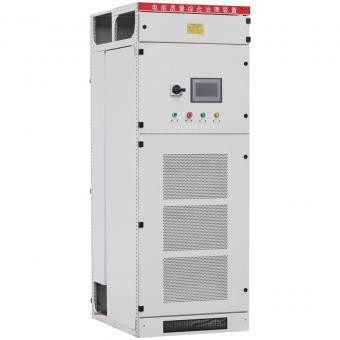
In high and low voltage power systems, grid integration of new energy sources and impact loads tend to trigger complex reactive power issues, such as continuous power fluctuations and harmonic superposition. With power electronic topology and real-time dynamic regulation, SVG reactive power compensation cabinets deliver precise full-range reactive power management, making them special core equipme...
read more
-
Jul 24,2026
Many new energy vehicle manufacturing plants and charging stations encounter issues such as excessive power factor at night and inexplicable fines for over-compensation. Everyone knows that resolving capacitive overcompensation requires installing reactors to absorb excess capacitive reactive power. However, the vast majority of electricians on site fell into the same trap: they directly used the ...
read more
-
Jul 28,2026
Introduction With the rapid development of modern industries, electrical loads are becoming increasingly complex, bringing higher requirements for power quality, energy efficiency, and grid stability. High voltage capacitor cabinets have become an essential solution for improving power factor, reducing reactive power losses, and optimizing the performance of power distribution systems. The high vo...
read more
-
Aug 06,2026
In power distribution systems, capacitor banks compensate for the reactive power generated by inductive loads using parallel-connected low-voltage power capacitors; this improves the power factor, reduces line losses, and avoids utility company penalties. However, a common misconception exists: the belief that the more capacitors are engaged—and the higher the resulting power factor—the better. In...
read more
-
Aug 13,2026
In modern power systems, reactive power compensation is widely used to improve power factor, reduce line losses, and increase the efficiency of electrical equipment. However, when the power source is a diesel generator, gas generator, or other synchronous generator, pursuing an extremely high power factor is not always a good idea. At first glance, a power factor close to 1.00 seems ideal. But for...
read more
-
Sep 02,2026
In low-voltage power factor correction systems, detuned reactors are widely used together with capacitor banks to prevent harmonic amplification and protect capacitors. Among the most common configurations, 7% and 14% detuned reactors serve different purposes and require different capacitor specifications. A 7% detuned reactor typically creates a tuning frequency of approximately 189 Hz in a 50 Hz...
read more
-
Sep 14,2026
Can PCS Replace a Dedicated SVG? With the rapid development of battery energy storage systems (BESS), many people ask whether the reactive power compensation function of a PCS can replace a dedicated SVG. The answer is: Sometimes yes, but not always. 1. PCS: Energy Conversion with Reactive Power Support PCS (Power Conversion System) is mainly used to convert electrical energy between the battery a...
read more