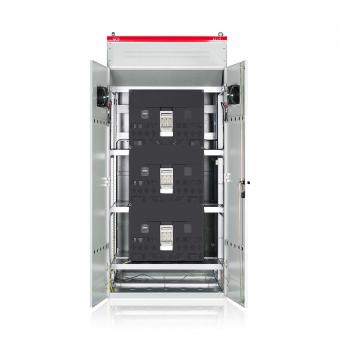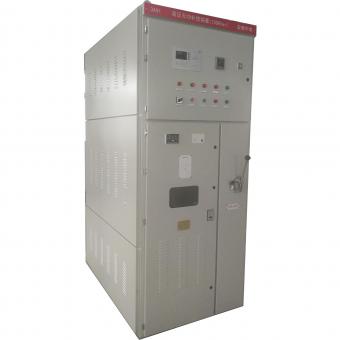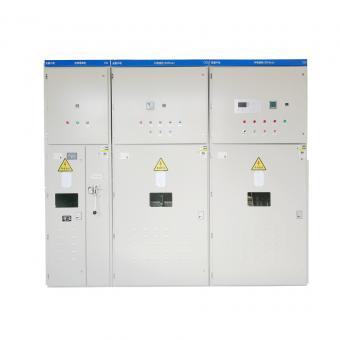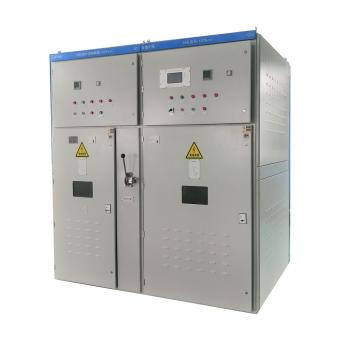
In low-voltage power distribution systems (usually 400V and below), the hybrid solution of static VAR generator (SVG) and traditional capacitor compensation is a compromise between performance and cost. The following is an in-depth analysis of the advantages and disadvantages of hybrid compensation and the risk of component damage based on technical principles and application scenarios:
· SVG : A power electronic device based on voltage source converter (VSC), which generates reactive current in real time through devices such as IGBT, with a response time of less than 10ms, and can dynamically compensate for capacitive/inductive reactive power.
· Traditional capacitor compensation : provides fixed capacitive reactive power through parallel capacitor banks, with a response time of >100ms, suitable for steady-state reactive power requirements.
· Hybrid compensation : The controller coordinates SVG and capacitor group. The capacitor takes the main compensation of fundamental reactive power, while SVG is responsible for dynamic fluctuation and harmonic control.
|
Dimensions |
Specific advantages |
Case Description |
|
Cost Optimization |
Capacitors bear 70%-80% of fundamental reactive power compensation, and the SVG capacity can be reduced to 30% of the traditional solution, reducing the initial investment by 20%-35%. |
A plastic processing plant uses 100kvar capacitor + 50kvar SVG, saving 120,000 yuan in investment compared to the pure SVG solution. |
|
Dynamic response improvement |
SVG makes up for the "step-type" compensation defect of capacitor switching, and improves the voltage fluctuation suppression capability of impact loads (such as welding machines) by more than 50%. |
After hybrid compensation in a certain automobile stamping workshop, the voltage flicker dropped from 1.8% to 0.7%, meeting the GB/T 12326-2008 standard. |
|
Harmonic control capability |
SVG can simultaneously compensate for the 5th, 7th, and 11th harmonics (THD≤5%), while traditional capacitors are prone to resonant amplification in a harmonic environment. |
In a textile factory with dense frequency conversion equipment, the harmonic content of the power grid was reduced from 12% to 4.2% after hybrid compensation. |
|
System reliability |
The capacitor operates independently from the SVG. When the SVG fails, the capacitor can still provide basic reactive power compensation to avoid complete system instability. |
When a data center SVG shut down due to a heat dissipation failure, the capacitor bank maintained 40% reactive power support to ensure the operation of IT equipment. |
|
Dimensions |
Potential risks |
Technical bottleneck |
|
Complex control strategy |
The coordination problem between capacitor switching and SVG output needs to be solved. If the parameters are not matched properly (such as capacitor switching time > SVG response time), it may cause over-compensation or under-compensation of reactive power. |
The hybrid compensation system of a steel plant had compensation oscillation due to unreasonable PI parameter settings, resulting in frequent circuit breaker tripping. |
|
Harmonic Interaction |
The amplification effect of capacitors on specific frequency harmonics (such as the 5th) may increase the harmonic processing load of the SVG, causing its IGBT to heat up more. |
In a hybrid system, it was measured that the capacitor amplified the 5th harmonic by 1.8 times and the switching loss of SVG increased by 25%. |
|
Increased difficulty in operation and maintenance |
SVG requires professionals to debug parameters (such as reactive power distribution ratio and harmonic control priority), while traditional capacitors only need to check the capacitance value regularly, which increases operation and maintenance costs by 30%-50%. |
A food factory did not update the SVG control program regularly, which led to a conflict between the capacitor and the SVG compensation amount, and the power factor dropped from 0.95 to 0.88. |
|
Poor environmental adaptability |
SVG is sensitive to temperature (optimal operating temperature is 25±10℃), and the capacitance decays faster at high temperatures (>60℃). The hybrid system has higher requirements for cabinet heat dissipation. |
When the temperature in a workshop was high in summer, the SVG stopped working due to a cooling fan failure, and the capacitors were damaged by swelling due to long-term high-temperature operation. |
· Damage form : dielectric breakdown, bulging, bursting
· Core reasons :
· Harmonic amplification effect : The capacitive reactance of capacitors decreases with increasing frequency. The capacitive reactance of the 5th harmonic (250Hz) is only 1/5 of the fundamental wave, which is easy to form a harmonic current path. For example, when there is a 5th harmonic voltage in the power grid, the harmonic current of the capacitor branch may reach 3-5 times the fundamental current, causing overheating and aging of the medium.
· Switching overvoltage : The transient overvoltage (up to 2-3 times the rated voltage) generated when the capacitor bank is switched causes local discharge of the insulating medium over a long period of time, which leads to breakdown after cumulative damage.
· Case : In a hybrid compensation system of a frequency converter workshop, after 14 months of operation, the capacitor had internal breakdown due to the 5th harmonic current (measured effective value 180A, exceeding the rated value by 120%). After disassembly, carbonization of the plate edge was found.
· Damage form : chip short circuit, open circuit, solder layer peeling off
· Core reasons :
· Dynamic compensation overload : When the load changes rapidly (such as motor start and stop), SVG needs to complete reactive power mutation within 10ms, and the switching loss of IGBT increases sharply. If the high load operation continues, the junction temperature (Tj) exceeds 150℃, which will cause fatigue failure of the solder layer.
· Harmonic current impact : The harmonic current amplified by the capacitor flows through the filter inductor and IGBT of the SVG, resulting in an increase in conduction loss. For example, a 10% 5th harmonic current will increase the IGBT loss by about 8%.
· Case : In a hybrid compensation system of a port crane, after SVG operated under frequent start-stop load for 6 months, the solder layer of the IGBT module cracked due to repeated fluctuations in junction temperature (70-120°C), resulting in a 30% decrease in compensation capacity.
· Capacitor switching contactor : Frequent operation causes contact erosion, shortening the life to 1/3 of normal operating conditions (usually <100,000 operations).
· SVG DC side capacitor : Long-term exposure to ripple current (>20% of rated value) causes the electrolyte to dry up, and the capacity drops below 80%, which requires replacement.
· Install harmonic filter : Connect 7% reactor in series on the capacitor branch to suppress the amplification of 5th and above harmonics, making the harmonic current distortion rate (THDi) less than 8%.
· Dynamic allocation strategy : Set the capacitor to bear steady-state reactive power (>100ms change), SVG to handle transient reactive power (<100ms change), and optimize collaborative control through fuzzy PID algorithm.
|
Application Scenario |
Recommended Mixing Ratio (Capacitor:SVG) |
Key points for selecting key components |
|
Steady-state loads such as fans and pumps |
7:3 |
The capacitor should be harmonic resistant (such as CBB81), and the SVG capacity should be configured according to 30% of the maximum reactive power fluctuation. |
|
Impact loads such as welding machines and punching machines |
5:5 |
SVG uses a three-level topology, and a 14% reactor is connected in series with the capacitor to suppress the third harmonic. |
|
Industrial applications with high frequency converter density |
3:7 |
SVG needs to have harmonic control function (THD compensation target ≤3%), and the capacitor should be dry self-healing. |
· Temperature monitoring : SVG cabinet temperature ≤40℃, capacitor surface temperature ≤55℃, when exceeded, forced cooling will be started.
· Regular testing : Measure the capacitance value every quarter (replace if the attenuation is greater than 10%) and perform SVG insulation withstand voltage test every year (DC 1000V, 1min without breakdown).
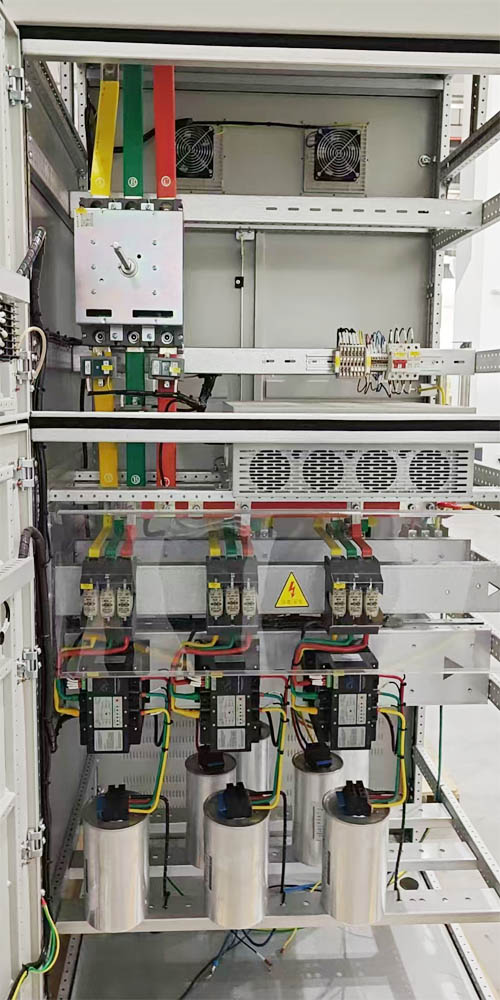 |
In low-voltage systems, hybrid compensation of SVG and traditional capacitors is the preferred solution for "performance-cost" balance, but its reliability depends on reasonable parameter matching and harmonic suppression measures. In practical applications, traditional capacitors are more susceptible to damage due to harmonic amplification and switching overvoltage, while SVG's IGBT modules face the test of dynamic load stress. By connecting series reactors, optimizing control strategies and strengthening temperature monitoring, the mean time between failures (MTBF) of the hybrid system can be increased from 8,000 hours in the traditional solution to more than 15,000 hours, giving full play to the synergistic advantages of the two.
Categories


NO.25,JINHE RD,HUAIYUAN ECONOMIC DEVELOPMENT ZONE ,BENGBU,ANHUI
Scan to WhatsApp: