With the rapid development of power electronic devices and microelectronics technology, a large number of nonlinear electrical equipment are widely used in industrial fields such as metallurgy, steel, energy, transportation, and chemical industry. For example, electrolysis equipment, electric locomotives, rolling mill machinery and high-frequency equipment are connected to the power grid, which makes the harmonic pollution of the power grid increasingly serious and reduces the power quality of the system.
Causes of harmonic generation
Harmonics in power grids have multiple sources and are generated at every stage of power production, transmission, conversion, and use.
In other aspects, harmonics are mainly generated from the following electrical equipment with nonlinear characteristics: (1) iron core equipment with ferromagnetic saturation characteristics, such as transformers and reactors; (2) equipment that uses electric arcs with strong nonlinear characteristics as working medium, such as gas discharge lamps, AC arc welding machines, and steelmaking electric arc furnaces; (3) switching power supply equipment based on power electronic components, such as various power conversion equipment (rectifiers, inverters, frequency converters), phase-controlled speed regulation and voltage regulation devices, and large-capacity power thyristor controllable switching equipment. They are widely used in chemical, electric railway, metallurgical, mining and other industrial and mining enterprises, as well as various household appliances. The significant characteristic of these nonlinear electrical devices (or nonlinear loads) is that they draw non-sinusoidal current from the power grid. Even if the power source supplies these loads with a sinusoidal voltage, the nonlinear voltage and current characteristics, where the current does not change synchronously with the voltage, result in a non-sinusoidal current flowing through the power grid. This current waveform consists of a fundamental frequency and harmonics that are integer multiples of the fundamental frequency, thus generating harmonics and severely distorting the power grid voltage. Furthermore, the power grid must provide additional electrical energy to the harmonics generated by these loads.
Harmonic currents generated by nonlinear devices connected to low-voltage power systems can be divided into two main categories: stable harmonics and variable harmonics. Stable harmonic currents refer to harmonics whose amplitude does not change over time, such as those generated by video display equipment and testing instruments. These devices act as a constant load on the power grid. Fluctuating harmonics, on the other hand, are harmonics whose amplitude changes over time, generated by laser printers, copiers, microwave ovens, etc. These devices act as a time-varying load on the power grid.
With the increasing use of power electronic equipment, and the fact that the harmonics generated by these devices have large amplitudes, they are currently the main harmonic sources in power supply systems.
The dangers of harmonics
When a large amount of harmonic current flows into the power grid, harmonic voltage drops are generated by the grid impedance and superimposed on the fundamental frequency, causing voltage distortion and deteriorating power quality. When the harmonics injected into the public power grid exceed a certain value, they can damage the normal operation of the grid itself and electrical equipment. At certain times, the harmonic problems caused by the injected harmonic current are particularly prominent, not only preventing equipment connected to the grid from functioning properly or even causing malfunctions, but also overloading the neutral line of the power supply system and affecting power transmission. Therefore, harmonic issues have received high attention from all relevant parties.
New harmonic suppression measures
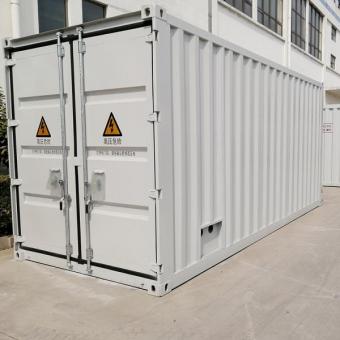
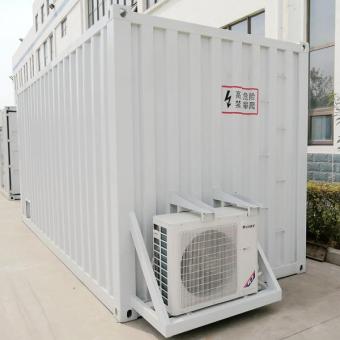
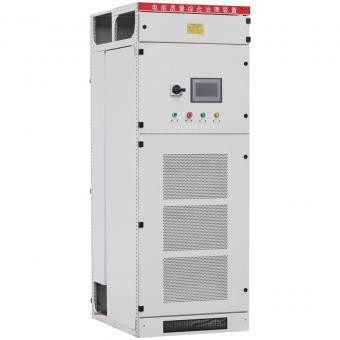
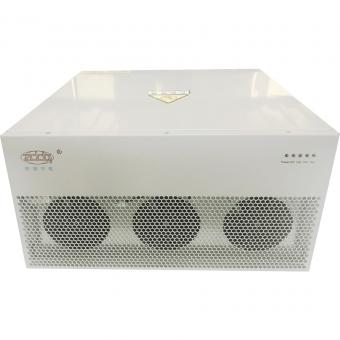
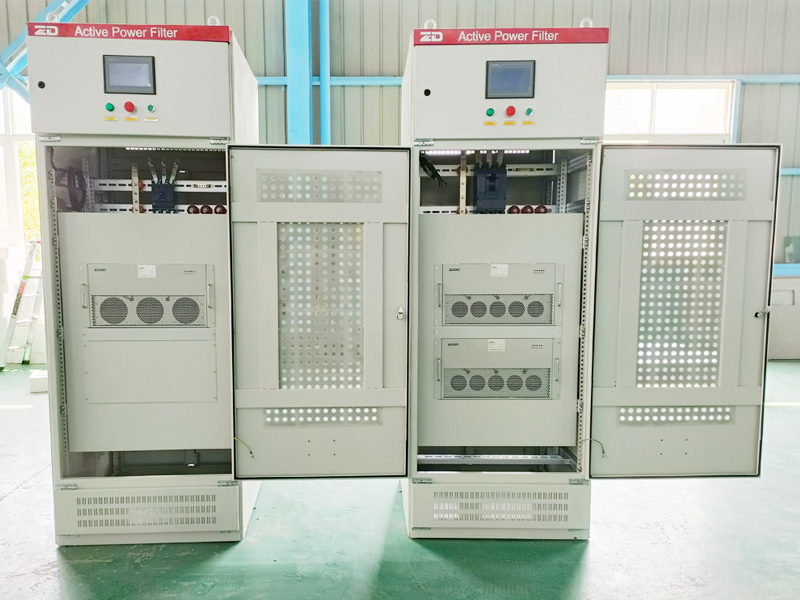
An active power filter (APF) is a new type of harmonic suppression and reactive power compensation device. Unlike traditional passive LC filters (which only absorb harmonics of a fixed frequency), it can compensate for reactive power when both current and frequency are changing, thus achieving dynamic compensation.
Active power filter(APF) can be broadly classified into series AFPs and parallel AFPs based on their grid connection method. Currently, over 90% of AFP devices in practical applications utilize a parallel structure with voltage inverters. In recent years, to leverage the advantages of AFPs, improve performance, reduce capacity, lower costs, and enhance applicability, hybrid series-parallel AFPs have been designed. These consist of a hybrid filter system (HPFS) composed of an active power filter (APF) and a passive power filter (PPF). The PPF filters out harmonic currents, while the APF improves the filtering effect and suppresses series resonance. To meet the needs of multifunctional and complex control of AFPs, the application of modern control methods such as variable structure control, fuzzy control, and artificial neural networks has resulted in better control performance and effects. Commonly used PWM generation methods include: triangular wave comparison method, hysteresis control method, predictive control method, specific harmonic elimination method, and space vector method. Therefore, by improving PWM modulation and switching frequency multiplexing techniques, effective compensation for higher harmonics can be achieved. When the capacity of an active filter is small, IGBT and PWM technologies are typically used for harmonic compensation; when the capacity is large, GTO and multiplexing technologies are used for harmonic compensation, with more significant results.
Categories


NO.25,JINHE RD,HUAIYUAN ECONOMIC DEVELOPMENT ZONE ,BENGBU,ANHUI
Scan to WhatsApp: