1.Basic Concepts and Definitions
Power Quality:
In a general sense, power quality refers to high-quality power supply. The power sector may define power quality as the compliance rates of voltage and frequency, as well as the annual hours of uninterrupted power supply, using statistical figures to demonstrate the safe and reliable operation of the power system.
Electricity consumers may simply define power quality as whether the power supplied to equipment meets required standards. From an engineering and practical perspective, this concept is further broken down and explained in detail.
Voltage quality measures the deviation between actual and ideal voltage levels, reflecting whether the power supplied by the utility provider meets standards. Voltage quality typically encompasses voltage deviation, voltage frequency deviation, voltage imbalance, voltage transients, voltage fluctuations and flicker, voltage sags (or surges) and interruptions, voltage harmonics, voltage sag suppression, undervoltage, overvoltage, among others.
Current quality. Current quality is closely related to voltage quality. Current quality encompasses current harmonics, interharmonics or subharmonics, phase lead or lag of current, and noise.
Power supply quality encompasses two dimensions: technical aspects (such as voltage quality and supply reliability) and non-technical aspects (including the response speed of power supply departments to user complaints and the transparency of electricity pricing). It also includes current quality and non-technical indicators, such as whether users pay their electricity bills on time and in full. II. Factors Affecting Power Quality The primary factors influencing power quality include the following six aspects: voltage deviation, voltage flicker and fluctuation, voltage sags and interruptions, frequency deviation, harmonics and sub-harmonics, and three-phase voltage imbalance.
(1) Voltage Deviation:
Voltage deviation is defined as the percentage by which the actual voltage deviates from the rated voltage. The calculation formula is as follows:
Voltage deviation = [(Actual voltage-Rated voltage) / Rated voltage] × 100%
The primary cause of voltage deviation is reactive load. Fluctuations in reactive load within the power grid and changes in power system operating modes cause the voltage applied to equipment to deviate from its rated voltage. Voltage deviation adversely affects equipment performance and reduces its service life, with the severity depending on the degree and duration of the deviation relative to the rated voltage. Generally, motors and lighting fixtures are the most susceptible to voltage deviation.
(2) Voltage Flicker and Voltage Fluctuation
Voltage fluctuation is defined as the degree of rapid or continuous variation in the root mean square voltage value. Voltage flicker reflects the visual impact on humans caused by lighting flickering induced by voltage fluctuations. The phenomenon of voltage fluctuation that causes illuminance flicker is termed voltage flicker. Voltage fluctuations and flicker are caused by variations in active or reactive loads due to nonlinear and impulse loads in the power grid; such impulse loads include electric arc furnaces, arc welding machines, and rolling mills. The amplitude of voltage flicker and fluctuation changes regularly or randomly within a certain range. Generally, sensitive loads with high voltage quality requirements—such as computers, PLCs, and variable-speed motors—are most susceptible to voltage fluctuations. Severe voltage flicker can render lighting equipment inoperable, harm user health, and, in extreme cases, damage the equipment itself.
(3) Voltage Sags and Outages
Voltage sag is defined as a power system fault in which the voltage drops below 90% of the rated value within a short period (10 ms to 1 minute) and then rapidly recovers to normal levels. Voltage outage is a more severe fault than voltage sag; it refers to the prolonged loss of user voltage (>3 minutes) (U <1% Un) following system failure and circuit breaker tripping. Voltage sags and outages are primary issues affecting power quality, causing production interruptions, loss of computer data, increased defect rates in manufacturing, and malfunctions in power system equipment. Lightning strikes, overhead transmission line faults, and full-voltage startup of large asynchronous motors can all induce voltage sags or outages to varying degrees.
(4) Frequency Deviation:
Similar to voltage deviation, frequency deviation is measured as the percentage of the actual value deviating from the rated value relative to the rated value. The allowable frequency deviation for power systems is 0.2 Hz; for larger-capacity systems, this range can be extended to +0.5 Hz to-0.5 Hz. The primary cause of frequency deviation is the imbalance between generator active output and active load. Frequency fluctuations significantly impact the normal operation of motors in power systems, and severe frequency deviations can lead to critical accidents.
(5) Harmonics and Interharmonics:
In actual power grids, voltage and current waveforms are not standard sine waves. Under steady-state conditions, Fourier series analysis of these waveforms yields multiple sine waves with distinct frequencies, amplitudes, and phases. These waveforms represent harmonics of different orders, interharmonics, noise, and DC components, respectively. Harmonics refer to high-frequency components with frequencies that are integer multiples of the power frequency voltage and current; interharmonics denote harmonic components whose frequencies are non-integer multiples of the fundamental frequency. Sudden changes in grid currents or load voltages generate harmonics, and most nonlinear loads typically inject harmonic components into the grid during operation. Harmonics represent the most prevalent issue in power quality, persisting from the initial utilization of electrical energy. Since real-world loads are never perfectly linear, they inevitably introduce varying degrees of harmonics into the grid. Harmonics indicate waveform distortion, which adversely affects electrical equipment—causing interference, damage, increased heat generation, and reduced service life. Power electronic devices and large-scale nonlinear loads such as arc furnaces are primary sources of higher-order harmonics. The widespread adoption of power electronics in recent years has made these harmonic sources increasingly dominant. Interharmonics pose hazards equivalent to integer-order harmonics but are significantly more challenging to suppress than their counterparts. They arise from significant fluctuations or impulsive nonlinear loads, exemplified by equipment like arc furnaces.
(6) Three-phase Voltage Unbalance:
Three-phase voltage unbalance typically refers to voltage imbalance at the common connection point caused by negative sequence components. Under normal operating conditions of the public connection point in power systems, the permissible three-phase voltage imbalance value is 2%, with a short-term limit of 4%. Three-phase imbalance adversely affects the safe operation of the entire power grid. The primary causes of three-phase voltage imbalance include the connection of high-capacity asymmetric loads and harmonic components in the grid. Electric locomotives and electric arc furnaces are typical examples of asymmetric loads. Additionally, transient faults in the grid, such as short-circuit faults, also contribute to three-phase voltage imbalance.
Mainstream products that can improve power quality
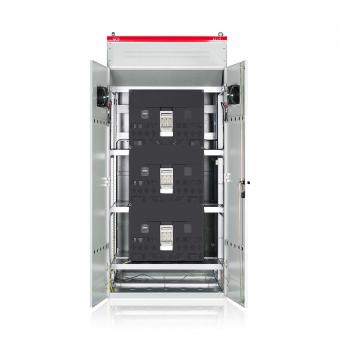
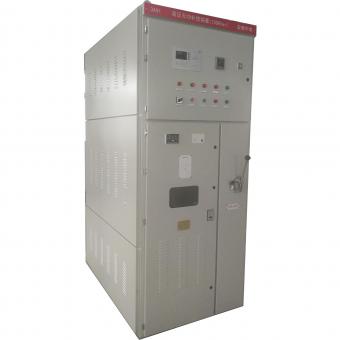
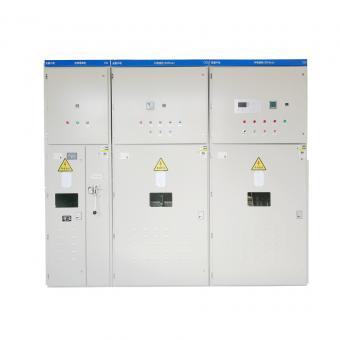
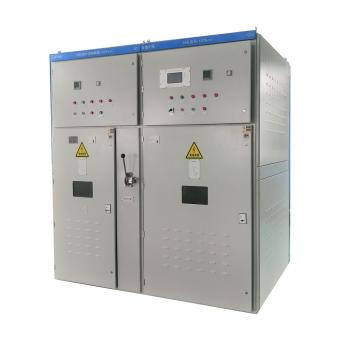
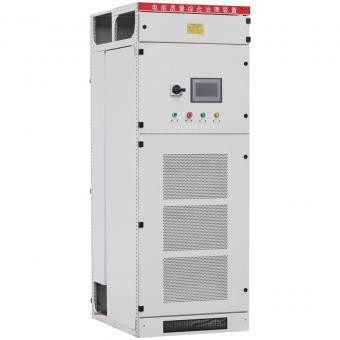
• LV Automatic Power factor correction PanelsCategories


NO.25,JINHE RD,HUAIYUAN ECONOMIC DEVELOPMENT ZONE ,BENGBU,ANHUI
Scan to WhatsApp: