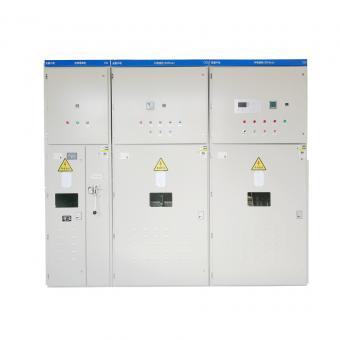
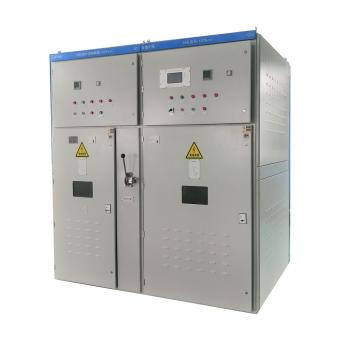
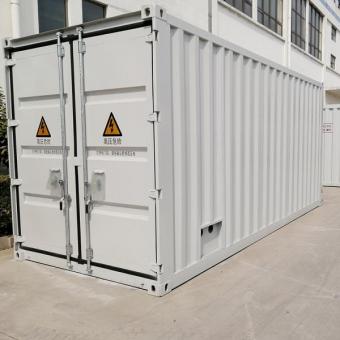
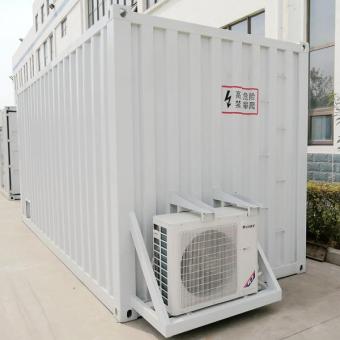
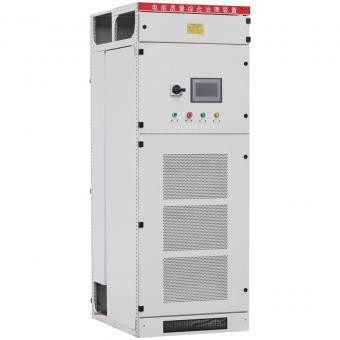
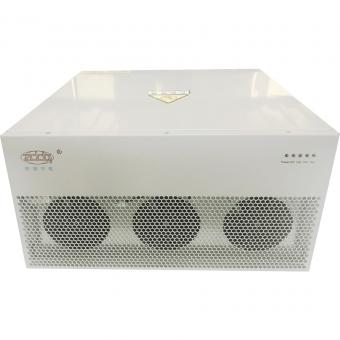
The application prospects of static VAR generators (SVG) in China's energy storage industry show significant growth potential, a trend driven by policy support, technological innovation and market demand. The following is an in-depth analysis based on the latest industry dynamics and technological progress:
I. Strong support from policies and industry standards
National policies clearly list SVG as the core supporting equipment for new energy grid connection. According to the "Carbon Peak Action Plan before 2030", wind power and photovoltaic installed capacity must reach more than 1.2 billion kilowatts by 2030, and the State Grid requires the SVG supporting ratio to be between 10% and 25%. This policy orientation directly promotes the expansion of the SVG market. It is expected that the SVG market size will reach 18 billion yuan by 2025 and increase to 36 billion yuan in 2031, with an average annual compound growth rate of 14%. In addition, the "Blue Book on the Development of New Power Systems" requires that 100% of new energy sites be equipped with dynamic reactive devices, further strengthening the rigid demand attributes of SVG.
Ⅱ. Deep integration of technological breakthroughs and application scenarios
1. The disruptive value of grid-type SVG
The new generation of grid-type SVG achieves voltage, frequency and inertia support for the power grid by integrating supercapacitors and MMC topology technology. For example, the super-capacitor grid-type SVG project put into operation in Tibet can increase the power supply capacity by 30,000 kilowatts and the new energy acceptance capacity by 29,000 kilowatts, provide instantaneous active/reactive support in the event of a grid failure, and significantly enhance the stability of weak grids at high altitudes. This type of technology has also been verified in the 500,000-kilowatt hybrid energy storage project in Xinjiang, where its SVG equipment successfully achieved dynamic reactive compensation and harmonic control, helping to improve the efficiency of new energy consumption.
2. Innovative practice of energy storage collaborative control
The deep collaboration between SVG and energy storage systems has become a technical hotspot. For example, the "photovoltaic + energy storage" project in Pingdingshan, Henan Province, achieved integrated control of "reactive compensation + active regulation" by sharing the DC bus, reducing the voltage fluctuation rate at the grid connection point by 60% and increasing the energy storage efficiency by 5%. In a 200MWh energy storage project in Zhejiang, SVG and PCS linkage control achieved smoothing of power fluctuations during the day and night (10-minute fluctuation rate <1%) and a 40% increase in reactive power support capacity at night. This collaborative mode not only optimizes the system economy, but also enhances the black start capability during grid failures.
3. Large-scale application of high-voltage cascade technology
High-voltage cascade SVG is the same technology as energy storage PCS. It uses a cascade H-bridge topology to achieve a power output of 100 megawatts, an efficiency of 99%, and can be directly connected to the medium and high voltage grid without a step-up transformer. The practice of companies such as New Wind and Solar has shown that this technology can reduce battery system losses and improve reliability. It has been operating stably in demonstration projects such as the Shaoxing 35kV direct-mounted energy storage system. As costs fall, high-voltage cascade solutions are expected to become the mainstream choice for large energy storage power stations.
III. Cost optimization and market competition pattern
1. The cost-effectiveness advantage is gradually emerging
In the past two years, technological improvements and large-scale mass production have made the price of SVG close to SVC, especially in the field of small capacity and wind power. For example, Huawei's "intelligent string SVG" reduces costs by 15%-20% through virtual technology, and inverter replacement tests by companies such as Sungrow Power Supply show that a 100MW photovoltaic power station can save nearly 2 million yuan in initial investment and hundreds of thousands of yuan in annual operation and maintenance costs. This trend has driven the rapid penetration of SVG in low-voltage distribution networks and distributed energy storage.
2. Market concentration and leading enterprises
Local companies such as NARI Relay Protection and Xuji Electric have taken a dominant position with their technological accumulation, and their products have performed well in high-end markets such as ultra-capacity grid-type SVG and high-voltage cascade energy storage. International brands such as ABB and Siemens remain competitive in the high-end market. At the same time, technology companies such as Huawei are rapidly increasing their market share through digital technology, and it is expected that their market share will reach 9% by 2031.
IV. Challenges and future trends
1. Technical bottlenecks and alternative competition
Although inverters can partially replace SVG in low-voltage scenarios, the reliability and response speed of SVG in high-voltage scenarios are still irreplaceable. For example, the 500,000-kilowatt project in Xinjiang uses 35kV direct-mounted SVG, and the stability of the inverter solution under high voltage has not been fully verified. In addition, the high cost of grid-type SVG (20%-30% higher than traditional SVG) may limit its short-term popularity.
2. Intelligent and green development
SVG is deeply integrated with AI and IoT technologies. For example, Shanghai Changgao Relay's photovoltaic SVG achieves millisecond-level dynamic response through adaptive algorithms, and optimizes reactive strategies in combination with weather forecasts to reduce losses by 10%-15%. In terms of environmental protection, SVG's efficient operation and low harmonic characteristics are in line with the "dual carbon" goals, and its energy consumption and emissions in the production process are also controlled through process optimization.
3. Differentiated development of regional markets
Due to strong industrial demand, the low-voltage SVG market in the eastern coastal areas accounts for more than 60%; the western regions benefit from the development of new energy, and the demand for high-voltage SVG is growing rapidly. For example, large-scale energy storage projects in Tibet and Xinjiang promote the application of grid-building SVG, while microgrid demonstration projects in Zhejiang and Guangdong focus on the coordination of distributed SVG and energy storage.
The application of SVG in the energy storage industry has been upgraded from auxiliary reactive power compensation to the core support for grid stability. With the release of policy dividends, accelerated technology iteration and continuous cost optimization, the SVG market will usher in explosive growth, and it is expected that its share in the reactive power compensation field will exceed 60% by 2031. Enterprises need to focus on grid-building SVG, high-voltage cascade technology and cross-domain collaborative control, while coping with inverter replacement competition and regional market differences to seize strategic opportunities in the construction of new power systems.