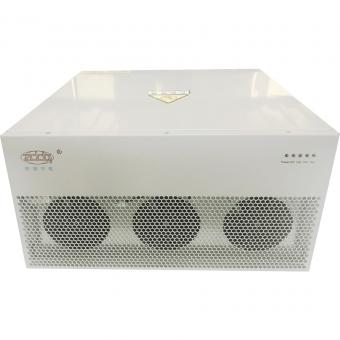
Many novice electricians make mistakes when connecting frequency converters, sometimes resulting in inverter errors or even module failure, smoke, and fire. The problem isn't the wiring itself, but rather a lack of understanding of the core principles, especially the common mistake of reversing the input and output wires! This article breaks down the practical wiring methods for frequency converter-controlled motors.
First, connect the main circuit. This is crucial; one wrong step and the equipment is ruined!
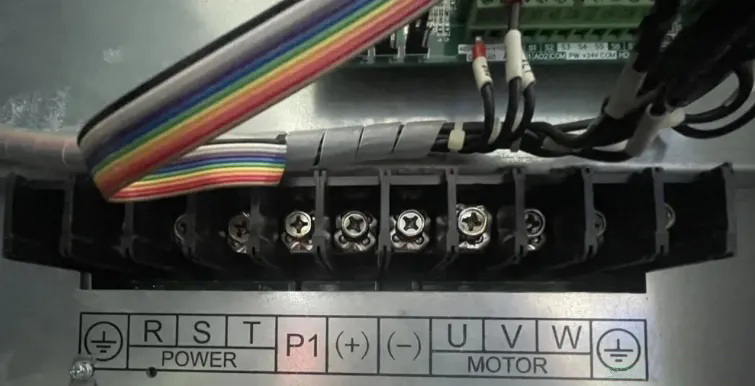
Connect the frequency converter's input terminals (usually marked R, S, T or L1, L2, L3) to a three-phase 380V power supply. Always install a circuit breaker and contactor between the power supply and the frequency converter for protection and to prevent circuit failures.
Important Reminder: Never connect the power wires to the output terminals (U, V, W), and never connect the motor wires to the input terminals! Reversing the input and output wires will instantly destroy the internal rectifier and inverter modules of the frequency converter, and in severe cases, cause smoke and fire. Remember this!
Inverter Motor Wiring Method
Connect the output terminals (U, V, W) to the motor's three leads. Before wiring, confirm whether the motor is allowed to reverse. Some equipment strictly prohibits reverse rotation; do not blindly connect the wires. If the motor reverses, either change the wiring or adjust the inverter parameters.
Also, the grounding terminal (PE or ⏚) must be reliably connected to the motor casing and the inverter's grounding terminal. The grounding wire must never be mixed with the neutral wire, otherwise there will be a safety hazard.
After connecting the main return line, connect the control section. Let's discuss the most common terminal control starting method, which is simple and easy to operate.
1. Start/Forward Rotation: Use a start button or switch, connected between the digital input terminal (e.g., DI1) and the common terminal (COM); Reverse Rotation: Connect another switch between DI2 and COM.
2. Speed Adjustment: Use a potentiometer of approximately 10kΩ, connecting its three pins to the inverter's analog input terminals (e.g., AI1), the 10V power supply, and GND respectively. Alternatively, you can use a PLC's 0~10V or 4~20mA signal connected to AI1 and GND.
3. Alarm Output: Connect a small light bulb or buzzer to the inverter's fault relay contacts (e.g., TA, TB, TC) for easy detection of inverter protection tripping.
4. Final Checks: Tighten all terminal screws and gently pull the wires to check for looseness; confirm that R, S, T are connected only to the power supply wires, and U, V, W are connected only to the motor wires; close all covers. For the first power-on test, measure the voltage; if there are no problems, then test run.
In fact, inverter wiring is easy even for beginners, as long as you distinguish between the incoming and outgoing lines, ensure proper grounding, and remember the precautions. You'll never have to worry about your inverter exploding again!
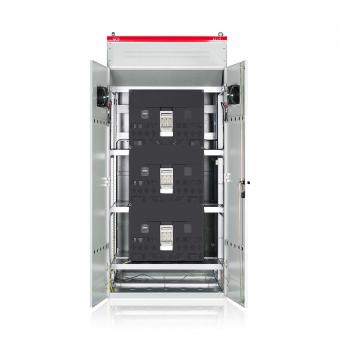
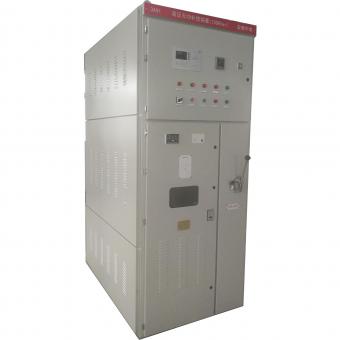
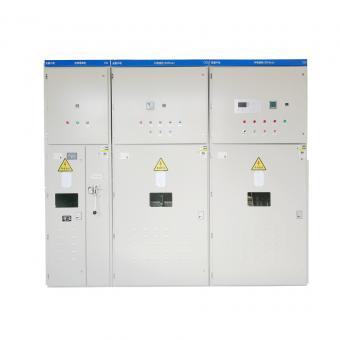
Also, for VFD's harmonic pollution and low power factor problem, we have following solution: