Are your factory's electricity bills skyrocketing? Are precision equipment breaking down unexpectedly? Are your transformers frequently overheating? Are you being fined by the power company for failing to meet power factor standards?
These troublesome problems often point to the same root cause— power quality .
In the field of power quality management, two star devices are frequently mentioned: SVG (Static Var Generator) and APF (Active Power Filter). They have similar names and are often discussed together, but can you really distinguish their respective functions?
This article will guide you through the core differences, applicable scenarios, and matching schemes between SVG and APF, so you'll never have to struggle with the selection process again.
Although both SVG and APF were developed to improve power quality, their core missions are quite different:
The core mission of SVG (Static Var Generator) is to improve the system power factor . In industrial production, large equipment such as electric motors and welding machines require a large amount of reactive power during operation, leading to a decrease in the power factor. SVG can accurately detect and quickly compensate for reactive power, solving the following pain points:
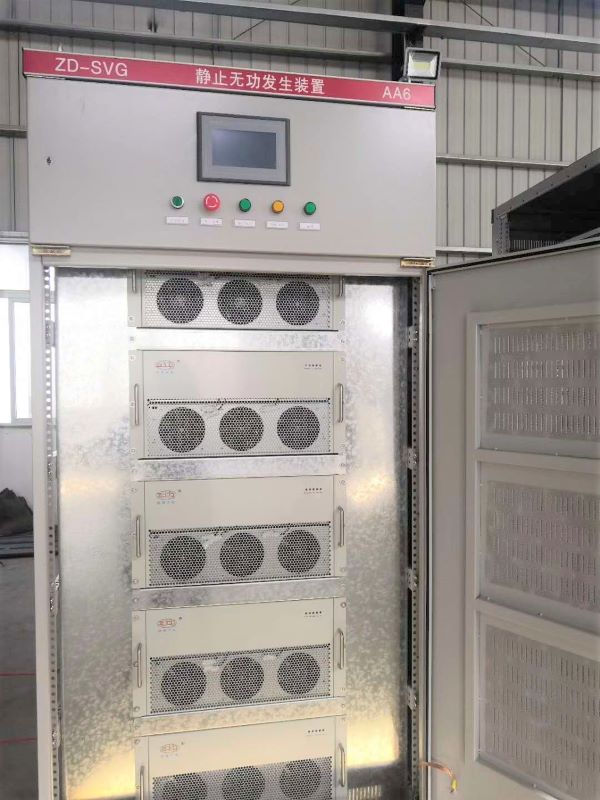
In the steel smelting industry, the operation of equipment such as electric arc furnaces and rolling mills generates severe reactive power fluctuations, leading to significant fluctuations in grid voltage and seriously affecting production stability. Installing SVG (Static Var Generator) can quickly stabilize the voltage, ensuring smooth production.
⚠️ Note: SVG has limited harmonic cancellation capabilities, especially for higher harmonics.
An APF is a device specifically designed to eliminate system harmonics , with the output current primarily composed of harmonics. In modern industry, nonlinear loads such as frequency converters and rectifiers are widely used, leading to increasingly serious harmonic pollution.
An APF acts like a precise hunter, quickly detecting and tracking harmonic currents, and generating a compensating current in the opposite direction to eliminate them.
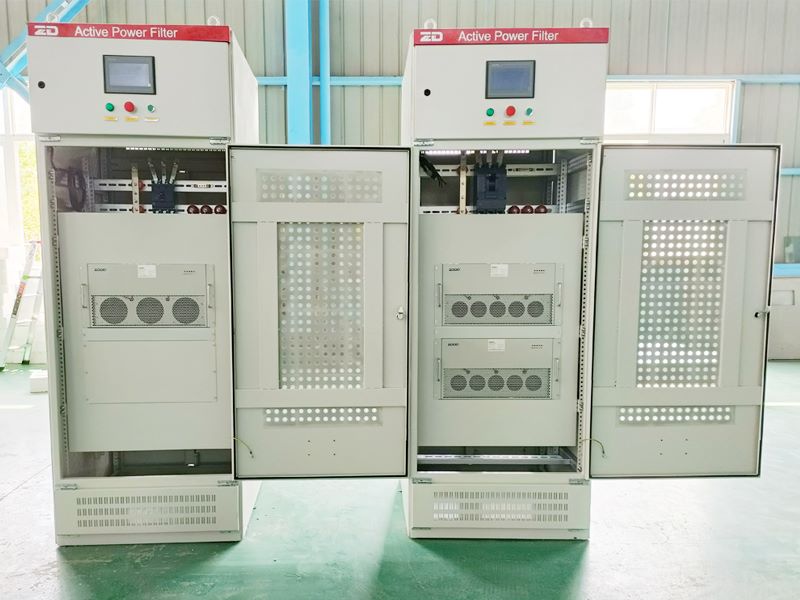
Typical Case
The switching power supplies of a large number of servers in a data center generate a lot of harmonics. The installation of an APF can effectively eliminate these harmonics and ensure the stable operation of the data center.
⚠️ Note: The reactive power compensation effect of APF is relatively limited.
|
Comparison Dimensions |
SVG |
APF |
|
Core Functions |
reactive power compensation |
Harmonic control |
|
Output current |
Dominated by fundamental frequency |
Mainly harmonics |
|
Main advantages |
Improve power factor, stabilize voltage, and mitigate three-phase imbalance. |
Eliminate harmonics, protect equipment, and prevent overheating. |
|
Typical scenarios |
Electric arc furnace, rolling mill, electric motor load |
Inverters, rectifiers, switching power supplies |
|
Limitations |
Limited effect in eliminating higher harmonics |
Limited reactive power compensation capability |
In practical applications, the configuration schemes of SVG and APF mainly depend on the load characteristics, grid requirements, and power quality issues that need to be addressed .
In large steel plants, equipment such as electric arc furnaces anj
d rolling mills not only generate severe reactive power fluctuations leading to voltage instability, but also produce a large number of harmonics that seriously pollute the power grid. SVG alone cannot effectively eliminate harmonics, and APF alone cannot solve the problems of reactive power compensation and voltage stability— only by using both in combination can they achieve complementary benefits .
The same applies to data centers with extremely high power quality requirements: the harmonics generated by a large number of servers, UPS and other equipment, coupled with strict power factor requirements, necessitate the joint protection of SVG and APF.
Scenarios where SVG is sufficient: Small processing plants whose main load is ordinary electric motors with low power factor but not serious harmonic problems can solve the reactive power compensation problem by configuring SVG.
Scenarios requiring only APF: automated production workshops, machining plants that use a large number of frequency converters, SMT production lines, injection molding workshops, PCB soldering lines, etc. - These scenarios are mainly nonlinear loads, with serious harmonic pollution but relatively stable reactive power demand.
Important Note
In scenarios with severe harmonics, the main approach to mitigation is through Active Power Factor (APF). This involves first reducing harmonic currents and protecting existing capacitor compensation devices, and then deciding whether to add reactive power compensation based on the power factor. Installing an SVG (Static Var Generator) from the outset not only fails to mitigate harmonics, but the long-term operation of the SVG in a high-harmonic environment can also accelerate the aging of the IGBT modules .
The perfect partner for power quality management
In large commercial complexes, numerous lighting and air conditioning systems generate harmonics and have significant reactive power requirements. The combined application of SVG and APF can ensure voltage stability and normal equipment operation, while reducing harmonic interference to precision equipment.
Of course, in many cases, it is necessary to consider factors such as cost, space, and actual needs to configure them separately.
Remember this in one sentence
Low power factor, unstable voltage → Use SVG (Static Var Generator)
Severe harmonic pollution, aging equipment → Use APF (Advanced Power Factor)
Complex problems, high requirements → Use SVG + APF together
SVG and APF are key devices for modern power quality management. Although they differ significantly in function and application scenarios, they are closely related and complementary, playing an indispensable role in the stable operation of the power grid and the supply of high-quality power.
Tags :
Categories
new blog


NO.25,JINHE RD,HUAIYUAN ECONOMIC DEVELOPMENT ZONE ,BENGBU,ANHUI
Scan to WhatsApp: