With the continuous advancement of science and technology, medical technology has been significantly improved, and advanced medical equipment continues to emerge, greatly improving the quality of medical services. However, the use of nonlinear devices in hospital power distribution systems may produce harmonic currents that can interfere with the normal operation of the system. The accumulation of harmonic currents will not only increase line losses and accelerate equipment aging, but may also pose a threat to the safety of the system and reduce its reliability. Therefore, it is crucial to take effective measures to control harmonics, purify the power distribution system, and ensure its safe operation.
1. Analysis of common problems in hospital power distribution system
1.1 Generate harmonics
Harmonics refer to the electrical components contained in the current that are integer multiples of the fundamental frequency. In power distribution systems, the main cause of harmonic generation is the existence of nonlinear loads. When nonlinear devices operate, the sinusoidal waveforms of voltage and current will be distorted due to the characteristics of these loads. In a balanced three-phase system, the even harmonics are usually eliminated, leaving only the odd harmonics.
1.2 Harmonic hazards
1) Accelerate insulation aging and shorten equipment service life
Harmonic voltages can exacerbate eddy current losses in capacitors and transformers and increase electrical stress levels in insulating materials. At the same time, harmonic current will make the copper loss of the transformer more serious, which will lead to increased noise, local overheating, accelerated aging of insulation materials, eventually leading to equipment damage and shortening the service life of transformers, electric power equipment and other equipment.
2) Increase line losses and equipment costs
The reduction and elimination of harmonics require external governance measures. In distribution systems, the accumulation of harmonic voltages and currents will lead to increased line losses and reduced load capacity of transformers, which in turn will lead to increased equipment costs and electricity bills.
3) Interfere with the communication system and reduce the quality of communication work
Due to the space limitations of distribution systems, the distance between transmission lines and communication lines is usually short. Therefore, the generation of harmonics can introduce interference through conductive coupling and electromagnetic induction, affecting the quality of the communication system. In severe cases, it may even cause the loss of communication information.
4) Switch action error, causing serious power accidents
The generation of harmonics will change the time delay characteristics of the ground current relay, making it impossible to effectively distinguish between zero-sequence current and third harmonics, causing malfunction of the switch and causing tripping. In addition, the protection devices and automation equipment of the power distribution system may malfunction, which will cause the stability of the regional power grid to be damaged, which may lead to large-scale power outages.
2. Characteristics of hospital power distribution system and main distribution of harmonic equipment
2.1 Characteristics of hospital power distribution system
As a key place for saving lives and healing the wounded, hospitals rely on the continuous operation of many medical equipment, so their power distribution systems must have extremely high reliability, safety and stability. Any power outage could have catastrophic consequences for critical medical equipment such as ventilators, electrocardiographs and infusion pumps used by patients. The power distribution system of a hospital usually has a 10/0.4Kv main transformer as the core. The main loads include ventilation, lighting, electronic medical equipment, computers and UPS systems, most of which are single-phase non-linear loads.
2.2 Main distribution of harmonic equipment in hospitals
1) Ventilation equipment
The ventilation systems used in many hospitals rely heavily on variable frequency fans and air conditioners, which are excellent at saving energy. However, frequency converters are also one of the main sources of harmonics. In fact, the current distortion rate caused by frequency converters is as high as 33% or more, which leads to the generation of a large number of fifth and seventh harmonics, thereby causing damage to the power grid.
2)Lighting equipment
Fluorescent lighting equipment is widely used in hospital lighting systems. These fluorescent lamps produce more harmonic currents. When multiple fluorescent lamps form a three-phase four-wire load, a large amount of third harmonic current will appear on the neutral line.
3) Electronic medical equipment
Most electronic medical equipment in hospitals rely on switching power supplies for power supply, and these switching power supplies generate specific third, fifth, and seventh harmonics, which are then injected into the power grid.
4) Computer and UPS
Today, most healthcare organizations rely on computer systems to perform daily operational and administrative tasks. These institutions have a large number of computer equipment, including servers equipped with backup power supplies such as UPS, and switching power supplies for personal computers, which are sources of harmonics.
3. Treatment plan and effects of harmonic equipment in hospital power distribution system
3.1 Treatment plan for harmonic equipment in hospital power distribution system
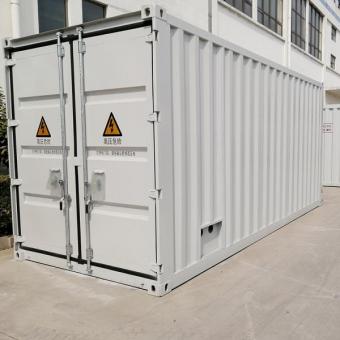
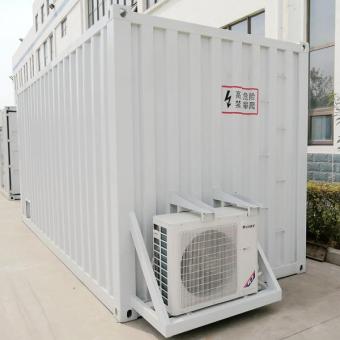
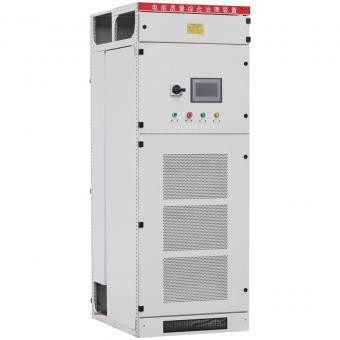
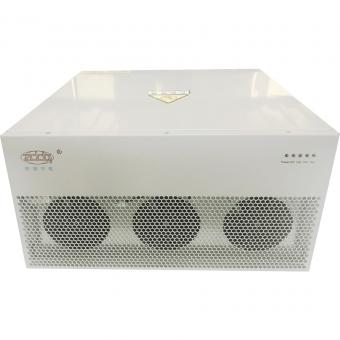
Designing filters is a common means of dealing with harmonic problems, including active, passive, and combined filters.
Active filters have significant effects, but are more expensive; passive filters have average effects, but are more cost-effective; and combined filters are excellent in both effect and efficiency. Filters can be installed centrally or on-site for individual devices. Governance programs should be tailored to the specific situation. For equipment with low harmonic content, such as lighting equipment, passive filters can be used for centralized management to effectively improve efficiency and reduce costs; while for equipment using frequency conversion devices, such as air conditioners and water heaters, combined filters are recommended centralized management.
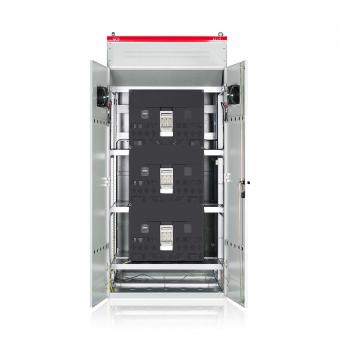
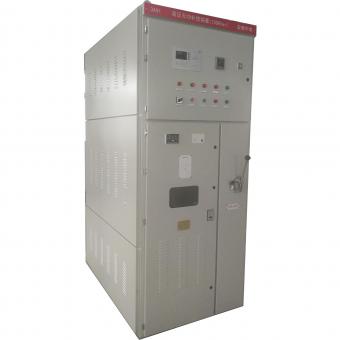
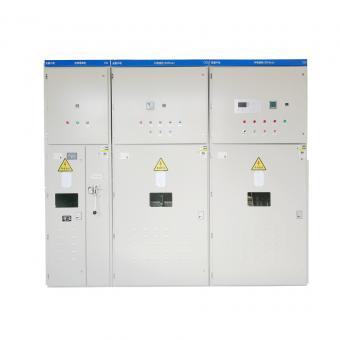
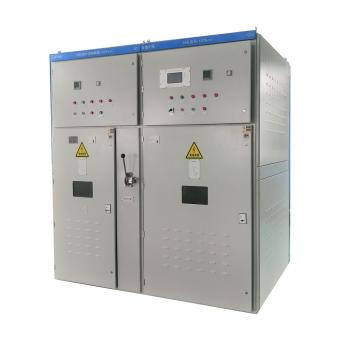
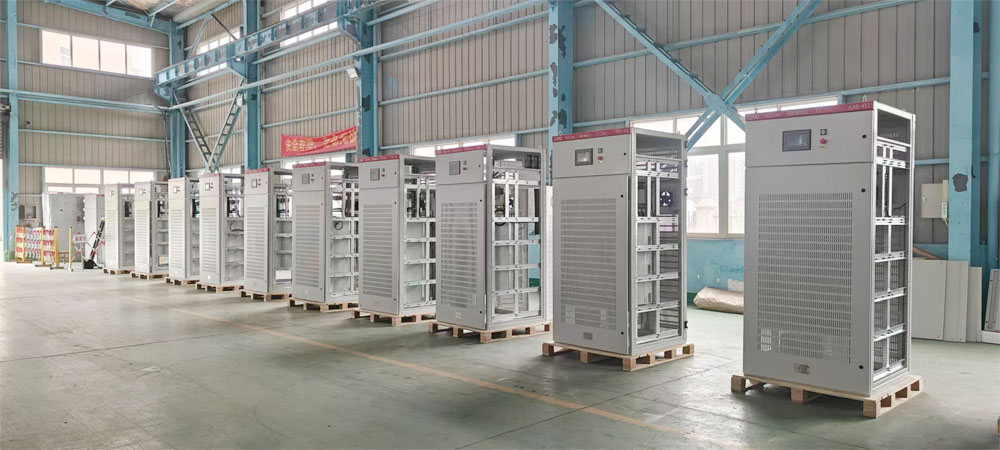
Active filters are mainly used to control harmonics in hospital power distribution systems, and their dynamic harmonic suppression and
reactive power compensation effects are very significant.
3.2 Control effect of harmonic equipment in hospital power distribution system
1) Improve the quality of power distribution system
Active filters can monitor the harmonic components in the load current in real time, and filter these harmonics and
improve the power factor. It can automatically track changing harmonics and compensate, with high controllability and responsiveness, effectively reducing the risk of resonance with the impedance of the distribution system. Therefore, it can absorb a certain amount of harmonics in the line, optimizing and improving the performance of the power distribution system.
2) Ensure stable operation of equipment
Installing active filters can significantly reduce harmonic levels and energy loss, effectively prevent harmonic damage to equipment, slow down insulation aging, and extend the service life of equipment. In addition, the reduction of harmonics also reduces the interference to equipment communication, improves power quality, enhances equipment operating efficiency and power energy utilization, while improving the safety, stability and reliability of the power distribution system, ensuring stable operation of the equipment.
3) Reduce energy consumption of power distribution system
The use of active filters can ensure that the harmonics generated by the hospital's power distribution system meet or fall below national standards. This move not only improves the efficiency of harmonic elimination, but also effectively reduces the energy consumption of the hospital's power distribution system. In addition, guiding harmonics to the active filter avoids potential threats to transformers and other electrical equipment, thus reducing energy consumption while protecting electrical equipment in the distribution system. This further ensures the smooth and efficient operation of medical work and improves the efficiency and quality of medical services.
4. As a critical infrastructure that is closely connected to people's lives, hospitals are directly related to the stable operation of their power distribution systems and the smooth operation of medical equipment, which are directly related to people's life safety and property protection. The generation of harmonics will have adverse effects on the hospital's power distribution system. Therefore, effective control of harmonics is necessary.
Active filter is an effective means to
solve the harmonic problem of hospital power distribution system. It can reduce the generation of harmonics and reduce the harm caused by harmonics, thereby protecting the hospital's electrical equipment, optimizing the hospital's power distribution system, and ensuring its stable operation.