I. Core Analysis: The Feasibility of Frequent Transformer Tap Adjustments
The essence of transformer tap adjustment lies in altering the turns ratio of the high-voltage winding to regulate the transformation ratio, thereby controlling the output voltage to accommodate fluctuations in grid load or deviations in system voltage. However, this regulation is not an operation that can be performed arbitrarily or frequently; its frequency is strictly constrained by a multitude of factors, including the equipment's structural design, the specific voltage regulation method employed, mechanical service life, and operational safety requirements. Blindly and frequently adjusting the taps not only fails to achieve the desired voltage stabilization effect but may instead trigger equipment malfunctions, compromise power supply reliability, and even pose significant safety hazards. Therefore, any decision to adjust taps must be based on a comprehensive assessment that takes into account the specific transformer type, its voltage regulation mechanism, and actual operating conditions.
(A) Adjustment Limitations for Different Voltage Regulation Types
1. Off-Circuit Tap Changer (OCTC) Transformers
Transformers equipped with Off-Circuit Tap Changers (OCTC) can only undergo tap switching when they are completely de-energized. The operational procedure for such adjustments involves a sequence of steps: de-energizing the transformer, verifying the absence of voltage, discharging residual energy, opening the tap changer compartment, manually or electrically switching the tap position, tightening connection fasteners, measuring the DC resistance of the windings, inspecting contact resistance and insulation integrity, and finally, re-energizing the transformer. This entire process is time-consuming, typically requiring several hours—or even longer—depending on on-site operating conditions and applicable safety protocols.
Since every adjustment necessitates an interruption in the power supply, frequent operations would significantly increase the duration of power outages experienced by users, thereby severely compromising the continuity of supply and the quality of service. This is particularly critical for industrial users or essential public facilities, where unplanned power outages can result in production line stoppages, data loss, or the abnormal shutdown of critical equipment. Furthermore, the repetitive cycles of de-energizing and re-energizing the transformer generate excitation inrush currents within the windings, triggering transient overvoltages and electromagnetic shocks; over time, the cumulative effect of these stresses accelerates the aging of the winding insulation and ultimately shortens the overall service life of the equipment.
Consequently, as a matter of principle, OCTC transformers should undergo tap adjustments only in specific circumstances: when the system voltage deviates significantly and persistently from its rated value (e.g., by more than ±5%), when seasonal load variations are pronounced (e.g., a substantial difference between summer peak loads and winter off-peak loads), or during the commissioning phase of newly installed equipment. In such instances, adjustments should be limited to a single occurrence or a very minimal number of operations; using OCTC transformers as a means for routine, daily fine-tuning of voltage levels is strictly prohibited.
2. On-Load Tap-Changing Transformer (OLTC)
On-load tap-changing transformers are equipped with a dedicated On-Load Tap Changer (OLTC) mechanism, which enables tap position switching without interrupting the load current. These transformers are widely utilized in substations and power distribution systems where a high degree of power supply continuity is required. Internally, the OLTC typically incorporates transition resistors or reactor circuits designed to smooth the current transfer during the switching process, suppress arc generation, and ensure the electrical stability of the switching operation.
Despite their capability for live operation, the mechanical and electrical components of an OLTC are subject to distinct service life limitations. Every tap position switch subjects the switching contacts to an arc discharge event. Even when equipped with highly efficient oil-filled arc-extinguishing chambers or vacuum interrupters, frequent and prolonged operation can lead to issues such as contact surface oxidation, carbonaceous deposits, and increased contact resistance. As contact resistance rises, localized heating intensifies; this may trigger excessive temperature rises, which in turn degrades the performance of the insulating oil. In severe cases, this can result in arc flash breakdowns or mechanical jamming of the switching mechanism.
Furthermore, the drive motor, transmission mechanism, and selector switch within an OLTC are all precision mechanical components. Frequent actuation accelerates gear wear, spring fatigue, and mechanical loosening, thereby increasing the risk of operational failure (failure to actuate) or erroneous operation. Manufacturers typically stipulate that the number of daily tap adjustments for an on-load tap-changing transformer should not exceed 10 times, and that an interval of at least one minute must be maintained between consecutive adjustments to ensure the switching mechanism has sufficient time to cool down and reset. Some high-precision control systems also incorporate a "lockout delay" function to prevent continuous automatic adjustments triggered by erroneous interpretations of transient voltage fluctuations.
(B) The Multiple Negative Impacts of Frequent Tap Position Adjustment
1. Accelerated Equipment Degradation and Reduced Service Life
Whether involving an Off-Circuit Tap Changer (OCTC) or an On-Load Tap Changer (OLTC), the tap changer mechanism remains one of the most vulnerable components within a transformer. Frequent operation leads to a dual form of deterioration: mechanical wear and electrical erosion. Specifically for the OLTC, every switching operation generates a momentary arc between the contacts. Although the duration of this arc is brief, the intense heat it generates causes the metal surfaces to melt and vaporize, resulting in the formation of oxide films that degrade the electrical conductivity of the contacts. As the number of switching operations increases, the contact gap widens and contact pressure diminishes; ultimately, this may lead to poor electrical contact, localized overheating, or even trigger internal discharge faults.
Furthermore, frequent adjustments increase the concentration of particulate matter and free carbon within the transformer oil, thereby compromising the dielectric strength of the insulating oil and, in turn, threatening the reliability of the main insulation system. Under prolonged operation, this may necessitate the premature replacement of the tap changer or the undertaking of major overhauls, significantly driving up maintenance costs.
2. Voltage Stability Disrupted, Impacting the Operation of Electrical Equipment
Although the primary objective of voltage regulation is to maintain a stable output voltage, excessively frequent tap adjustments can paradoxically induce a phenomenon known as voltage "oscillation." For instance, in scenarios where the automatic voltage regulation control logic is imperfect, even minor voltage fluctuations may trigger adjustment commands, causing the tap changer to switch back and forth repeatedly and resulting in the output voltage oscillating frequently around its nominal value.
Such voltage fluctuations are highly detrimental to sensitive loads:
--Precision electronic equipment (such as servers, medical instruments, and PLC control systems) typically requires voltage fluctuations to be confined within a ±2% tolerance range; frequent fluctuations can lead to program anomalies, data corruption, or hardware damage.
--For AC motors, frequent voltage variations induce periodic fluctuations in magnetic flux, leading to increased iron and copper losses, reduced efficiency, and elevated operating temperatures; over the long term, this can accelerate the aging of winding insulation or even result in motor burnout.
--Lighting fixtures (such as LED lights and fluorescent lamps) may exhibit flickering, thereby compromising visual comfort and the overall quality of the working environment.
3. Rising Operation and Maintenance Costs, Impacting Economic Efficiency
Frequent adjustments not only increase the operational burden on maintenance personnel but also significantly elevate the equipment failure rate and the frequency of required inspections and repairs. The typical maintenance cycle for an On-Load Tap Changer (OLTC) is 5 to 10 years, or after a specific threshold of switching operations (typically several thousand) has been reached. If frequent adjustments cause premature failure, an unscheduled major overhaul or replacement becomes necessary, with the cost of a single repair potentially reaching tens of thousands of yuan or even higher.
Concurrently, frequent power outages necessitated by tap adjustments—particularly for Off-Load Tap Changers (OLTCs)—result in indirect economic losses. For example, for a medium-sized manufacturing enterprise, a single one-hour power outage could result in a loss of production value amounting to tens of thousands of yuan; if voltage regulation requires multiple outages per month, the cumulative annual losses could be substantial. Therefore, when evaluated from a total lifecycle cost perspective, prudently controlling the frequency of voltage regulation is a critical factor in ensuring the economically efficient operation of transformers.
II. Relevant Chinese Standards Governing Transformer Tap Adjustment
To standardize voltage regulation operations and ensure equipment safety and system stability, my country has promulgated numerous industry-specific and national standards regarding the operating conditions and frequency of transformer tap changers:
1. *Operating Regulations for Power Transformers* (DL/T 572-2010)
These regulations explicitly state that adjustments to the tap changers of off-circuit tap-changing transformers must be performed only after the transformer has been completely de-energized and all safety measures (such as grounding and voltage verification) have been completed. Upon completion of the adjustment, the DC resistance of each phase winding must be measured to ensure three-phase balance and proper contact; the deviation must not exceed ±2%.
For on-load tap-changing transformers, the regulations emphasize strict adherence to the operating procedures and limitations specified by the manufacturer. Under normal operating conditions, the number of daily voltage regulation operations should not exceed 10, and an interval of at least one minute must be maintained between consecutive adjustments to prevent overheating or mechanical fatigue of the switching mechanism.
2. *Technical Parameters and Requirements for Oil-immersed Power Transformers* (GB/T 6451-2015)
This standard sets specific requirements regarding the mechanical service life of on-load tap changers: the tap changer must be capable of withstanding at least 10,000 mechanical operating cycles and performing at least 5,000 electrical switching operations at rated current (i.e., the electrical service life must be no less than 50% of the mechanical service life). This provision imposes limitations on the feasibility of frequent operations at the design stage, thereby requiring operating entities to rationally allocate the frequency of adjustments during actual operations and avoid concentrated usage.
3. *Technical Parameters and Requirements for Dry-type Power Transformers* (GB/T 10228-2015)
Regarding the off-circuit tap changers of dry-type transformers, this standard stipulates that adjustments must be performed while the unit is de-energized. Furthermore, following an adjustment, checks must be conducted to verify the correctness of the winding connections, the tightness of the terminals, and whether the insulation resistance meets the specified requirements (generally, not less than 10 MΩ). Given that dry-type transformers possess lower heat dissipation capabilities and their insulating materials are sensitive to heat, the risk of localized overheating resulting from frequent operations is significantly higher; consequently, unnecessary and repetitive adjustments should be strictly avoided.
In summary, adjusting transformer tap settings is a highly technical and high-risk operation. It is imperative to adhere to the principles of "necessity, orderliness, and restraint," making scientifically grounded decisions based on the specific equipment type and operating conditions, while strictly avoiding the misuse of the voltage regulation function as a tool for real-time, fine-grained voltage adjustments. Only by doing so can we simultaneously safeguard power supply quality, extend equipment service life, reduce operation and maintenance costs, and ensure the safe, economical, and efficient operation of the power system.
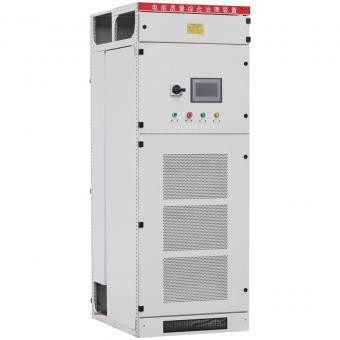
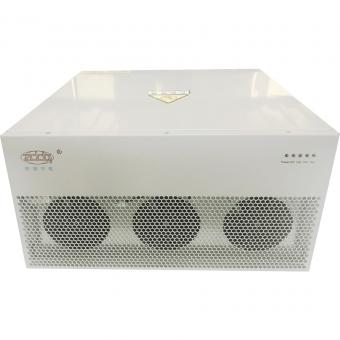
ZDDQ Main products for transformer power factor correction and harmonic mitigation:
--APFC Panel
--Static Var Generator
--Active Hamronic Filter