-
Sep 18,2023
ZDDQ STATCOM FACTORY First-class production technology and the spirit of continuous innovation allow us to proudly display factory. European customers are welcome to visit our factory, see our manufacturing process with their own eyes, and experience this amazing field with us. Built with care and pursuing excellence, our factory welcomes you at any time!
read more
-
Aug 23,2023
ZDDQ----Power Quality Issues in the Data Center Industry A large number of modern electrical equipment and devices are used in the data center industry, such as credit card terminal equipment, communication systems, computers, network control equipment, various digital office equipment, lighting control systems, fire protection systems, monitoring systems, etc. A large number of non-linear power l...
read more
-
Jul 26,2023
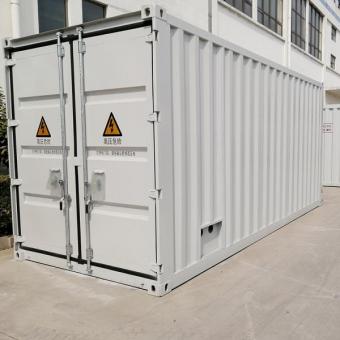
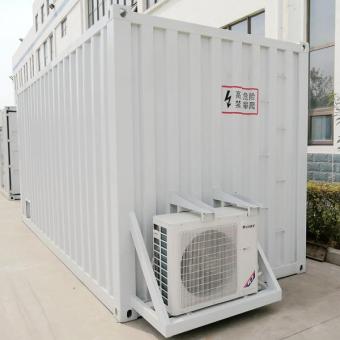
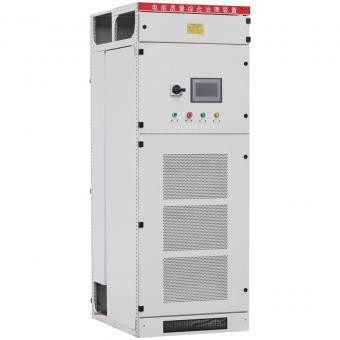
Thanks to the customer's trust, we completed the production and delivery of 300kvar SVG in 10 days. The customer also successfully completed the installation. ZDDQ Power Quality Products ZD-APF Active Harmonic Filter ZD-SVG Static Var Generator ZD-DWT Thyristor Switched Capacitor Banks ZD-FGSVG MV Statcom ZD-GWJ MV Capacitor Banks
read more
-
Jun 05,2023
Static Var Generator (SVG) is an electronic reactive power compensation system, for both capacitive and inductive power. Static Var Generator (SVG) is an electronic reactive power compensation system, for both capacitive and inductive power. It has the same operating principle as an active filter; the SVG injects a current in the opposite direction to counteract the installation's non-useful power...
read more
-
Apr 21,2023
ZDDQ Medium Voltage(3kV~24kV) Metal-enclosed Power Capacitor Banks are custom designed for application on industrial, commercial, and utility power systems that require medium voltage power factor correction. The capacitor banks are configurable as fixed or automatic controlled with 1 or more stages. The power capacitor banks are designed for placement in outdoor or indoor substations and come ful...
read more
-
Apr 16,2023
Welcome our client to visit our Statcom Manufacture. Our Statcom product lines 3.3kV Static Var Generator 6.6kV Static Var Generator 11kV Static Var Generator 33kV Static Var Generator
read more
-
Apr 28,2023
Busy work, don't forget to relax your shoulders; When in a hurry, don't forget to appreciate the beautiful moments; The breeze is blowing, don't miss the warm spring; It's May Day, don't forget to enjoy the leisurely weekend. Happy Labor Day!
read more
-
Mar 27,2023
In low voltage distribution system, usually two solutions for the power factor correction: capacitor bank and static var generator. Low Voltage Capacitor Bank The load current provided by the grid to the electrical equipment is composed of active current and reactive current. The reactive current is exchanged between the power supply and the load, which greatly occupies the grid, greatly reduces t...
read more
-
Mar 20,2023
ELECTRONIC Power Compensation With electronic compensation it is possible to compensate inductive, capacitive and harmonic reactive power. In addition, it is possible to eliminate imbalances in the flows phase. This creates extra power space, limits energy losses and prevents fines and claims. Static Var Generator Active PFC Static Var Generator(SVG) compensates reactive power caused by inductive ...
read more