The Electrical Industry is Undergoing a Transformation! Four Core Technologies Supporting the Future of New Power Systems
With the advancement of "dual-carbon" goals and the accelerated implementation of new power systems, the electrical industry has long since moved beyond the old model of "traditional operation and maintenance," ushering in a profound transformation towards greening, intelligence, and power electronics.
From grid upgrades to new energy grid integration, from industrial electrification to ensuring electricity supply for residents, every aspect relies on the iterative empowerment of electrical technology. As a practitioner in the electrical field rooted in Anhui and serving the world, ZDDQ has been deeply involved in the industry for many years, witnessing and participating in this technological revolution. Today, we'll discuss the four core technologies supporting the high-quality development of the electrical industry and understand future industry trends!
I. Wide Bandgap Semiconductors: An "Efficiency Revolution" for Electrical Equipment
When discussing the upgrade of electrical equipment, one cannot ignore third-generation semiconductors—SiC (Silicon Carbide) and GaN (Gallium Nitride). Compared to traditional silicon-based devices, it's like equipping electrical equipment with a "super engine," bringing three disruptive advantages:
✅ Significantly reduced losses: Switching losses are reduced by 50%-70% compared to silicon-based devices, maximizing energy utilization efficiency;
✅ Significantly improved efficiency: 10kV converter equipment uses all SiC modules, achieving an overall efficiency exceeding 98%;
✅ Significantly reduced size: High-frequency design allows for a reduction of over 30% in the size of filters and heat sinks, making it suitable for space-constrained scenarios such as urban underground substations and data centers.
Today, it is widely used in new energy grid connection, energy storage converters, and electric vehicle supercharging, becoming a core breakthrough for upgrading electrical equipment. ZDDQ is also actively developing SiC power units, overcoming engineering challenges, and further upgrading equipment efficiency.
II. Modular Electrical Equipment: Saying Goodbye to "Slow and Meticulous Work," High Efficiency and Controllability
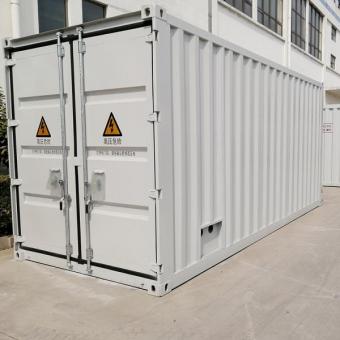
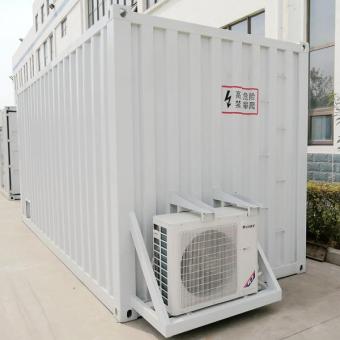
Traditional substation and distribution room construction often faces pain points such as long construction periods, complex on-site construction, and inconsistent quality. The emergence of modular design has directly restructured the implementation model of electrical engineering—breaking down electrical systems into standardized functional modules, assembling and debugging them in the factory, and then simply assembling them on-site.
The advantages of this model are readily apparent: on-site installation time is shortened by more than 50%, factory production ensures consistent quality, space utilization is increased by 60%, and it allows for flexible expansion and overall relocation, perfectly adapting to the needs of distributed energy, temporary power supply, and rapid deployment of data centers.
In industrial power distribution and new energy supporting projects, ZDDQ's modular prefabricated substations and intelligent power distribution modules have already been deployed in batches, effectively addressing customers' core demands of "tight schedules, limited space, and high reliability requirements."
III. Digital Twin + Intelligent Operation and Maintenance: From "Reactive Emergency Repair" to "Proactive Prediction"
With the expansion of the power grid and the increasing penetration rate of new energy, the traditional "regular inspection + emergency repair" model is no longer sufficient to meet the demands for high reliability and low cost operation and maintenance. The application of digital twin technology enables "full lifecycle visual management" of electrical systems.
In simple terms, it's about creating a "virtual clone" for electrical equipment, integrating real-time operational data, environmental data, and historical fault data. Through simulation models, it can predict potential problems such as insulation aging and poor contact, achieving closed-loop management of "early warning—diagnosis—dispatch—maintenance."
Whether it's improving the reliability of individual devices or optimizing the entire regional power grid, digital twins provide precise support. ZDDQ is deploying an integrated system of intelligent sensing, edge computing, and cloud platforms to help customers achieve digital management and control of electrical assets, truly reducing costs and increasing efficiency.
IV. Grid-based Control Technology: The "Stable Cornerstone" of High-Proportion New Energy Power Grids
With the continuous increase in the proportion of new energy sources such as wind power and photovoltaics, grid inertia decreases and oscillation risks increase. Traditional grid-connected converters can no longer meet stability requirements. Grid-based control technology acts like a "stabilizer" for the power grid.
By simulating the characteristics of a synchronous generator, this converter possesses the ability to actively support grid voltage and frequency, suppress oscillations, and provide short-circuit support. It can operate stably under islanded and weak grid conditions, and seamlessly switch between grid-connected and islanded modes, ensuring the power supply continuity for critical loads such as hospitals and data centers.
As a core supporting technology for high-proportion renewable energy grids, ZDDQ continuously invests in research on grid-connected converter control algorithms, breaking through key technologies such as multi-machine parallel current sharing and fault ride-through, safeguarding the stable operation of new power systems.
The transformation of the electrical industry is never a breakthrough of a single technology, but rather the result of the collaborative evolution of multiple technologies. Wide-bandgap semiconductors improve efficiency, modular design accelerates progress, digital twins enhance intelligence, and grid-connected technology maintains stability—these four technologies support each other, jointly driving the electrical industry towards higher efficiency, higher reliability, and lower costs.
Rooted in Anhui and serving the whole country, ZDDQ will always focus on technological innovation, deeply cultivating the fields of power transmission and distribution and renewable energy electrical systems, working hand in hand with industry partners to contribute to the construction of new power systems and jointly usher in a green, digital, and intelligent future! Any power quality problems pls feel free to contact us.