In the field of power quality management, most industrial operators focus heavily on conventional issues such as fundamental frequency voltage fluctuation and integer harmonic distortion. While these common power disturbances are well-monitored and mitigated in most modern power grids, interharmonic distortion remains a niche, underrated, and highly destructive power quality problem for sophisticated industrial power systems. Unlike regular harmonics that occur at integer multiples of the fundamental grid frequency, interharmonics are non-integer frequency components that often evade conventional power quality detection devices, leading to persistent, hard-to-diagnose system failures. This blog delves into the technical mechanism, typical causes, system hazards, and professional mitigation strategies of interharmonic distortion, providing targeted technical references for industrial power operation and maintenance.
Ⅰ. Technical Definition & Core Mechanism of Interharmonics
According to IEC 61000-4-7 international power quality standards, interharmonics refer to voltage and current frequency components that exist between two adjacent integer harmonics of the fundamental grid frequency (50Hz/60Hz). Different from standard harmonics with fixed frequency multiples, interharmonic frequencies are irregular and non-fixed, presenting continuous spectral distribution characteristics in power spectrum analysis.
The formation mechanism of interharmonics is essentially different from conventional harmonic distortion. Standard harmonics are mainly caused by fixed non-linear loads such as frequency converters and rectifiers, while interharmonics stem from time-varying periodic load fluctuation and cross-frequency coupling between multiple power electronic devices. When multiple variable-speed drive systems, distributed renewable energy grid-connected inverters, and periodic impact loads operate simultaneously, frequency modulation and amplitude modulation effects will be generated on the fundamental power waveform, forming non-integer frequency interharmonic components.
Ⅱ. Typical Industrial Scenarios Generating Interharmonic Distortion
Interharmonic pollution is concentrated in high-precision and dynamic industrial power scenarios, which are widespread but easily ignored. The main application scenarios include three categories:
Third, intermittent impact load production lines. Stamping, welding, and pulse processing equipment with frequent start-stop and load mutation characteristics are important sources of high-amplitude interharmonic distortion.
Ⅲ. Unique Hazards of Interharmonic Distortion to Power Systems
Compared with conventional harmonics, the damage of interharmonics is more concealed and targeted, and its long-term cumulative effect will seriously threaten the stability and service life of power equipment:
4. Abnormal flicker of industrial lighting and display systems. Medium and low-frequency interharmonics are the core inducement of subtle grid flicker that cannot be eliminated by conventional voltage regulation equipment, affecting factory production environment and precision optical detection equipment.
Ⅳ. Professional Mitigation Solutions from Anhui Zhongdian Electric
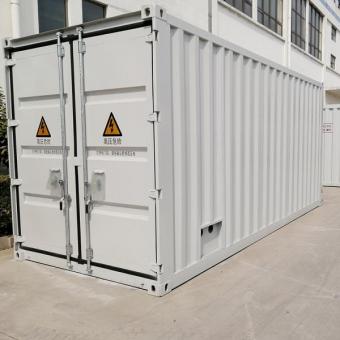
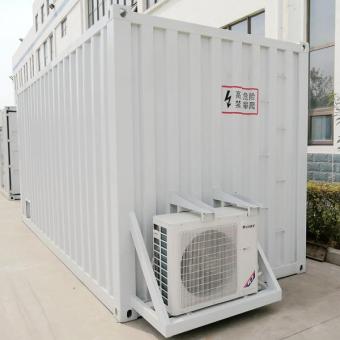
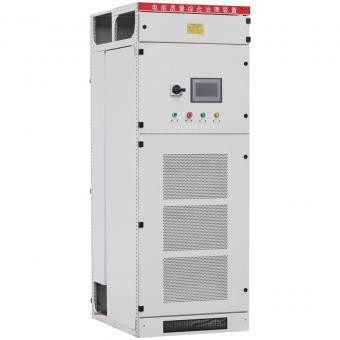
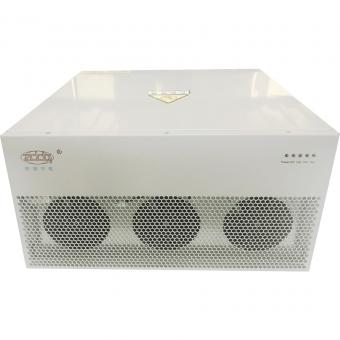
Aiming at the technical pain points of difficult detection and poor suppression effect of interharmonic distortion, Anhui Zhongdian Electric Co., Ltd. has developed targeted integrated power quality management solutions based on years of industrial grid operation experience and power electronic technology accumulation, breaking through the limitations of traditional harmonic control equipment.
Fourth, overall grid power quality optimization. Combined with on-site grid operating conditions, we realize coordinated control of interharmonic suppression, reactive power compensation and voltage stabilization, comprehensively solve hidden power quality dangers caused by time-varying loads, and improve the overall operation efficiency and stability of industrial power systems.
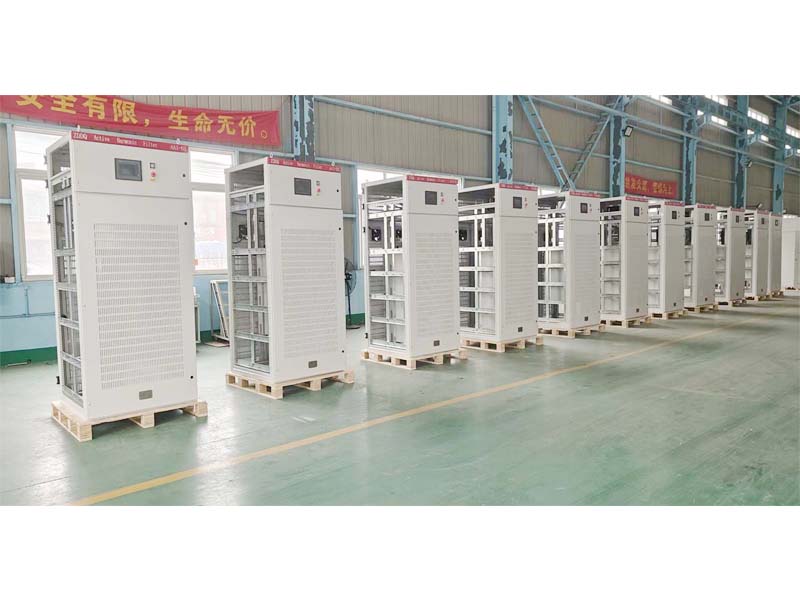
With the continuous upgrading of industrial electrification and the large-scale access of new energy equipment and power electronic loads, interharmonic distortion has become a key niche factor restricting the high-quality operation of modern industrial power grids. Traditional power quality management methods can no longer adapt to the complex and diversified grid disturbance forms. As a professional power quality solution provider, Anhui Zhongdian Electric Co., Ltd. focuses on subtle and difficult power quality problems, provides precise, efficient and customized technical governance schemes for industrial enterprises, and helps enterprises eliminate hidden grid risks, reduce equipment loss and optimize operating costs.
Categories
new blog


NO.25,JINHE RD,HUAIYUAN ECONOMIC DEVELOPMENT ZONE ,BENGBU,ANHUI
Scan to WhatsApp: