In the realm of power systems, reactive power compensation is an indispensable topic. Proper selection leads to lower electricity costs and stable equipment operation; incorrect choices may result in costly complications. Faced with various devices such as capacitor bank, SVGs, and AHFs on the market, how should one make the right choice? This article provides a clear and straightforward explanation in one go.
I.Summary of Core Device Advantages and Disadvantages:
To help you quickly grasp the overall picture, we first present a comparative table highlighting the key features of the three mainstream devices.
|
haracteristic Dimension |
Capacitor Bank(Economical and Practical Type) |
SVG (Dynamic and Precise)
|
AHF (Professional Governance Type)
|
|
|
Core Principle |
Similar to a "water reservoir," switching capacitors provides reactive power.
|
Like a "smart water pump," it delivers reactive power accurately in real time.
|
Features such as the "Precision Filter" actively cancel harmonics and compensate for reactive power.
|
|
|
speed of response |
Slow (100–200 ms)
|
Extremely fast: 5 milliseconds |
Ultra-fast (<100 microseconds)
|
|
|
Compensation Effect |
Stepwise, hierarchical adjustment
|
Smooth and continuous, with stepless adjustment
|
Core function, filtration rate >95%
|
|
|
Harmonic Processing |
May amplify harmonics and induce resonance |
possesses a certain level of harmonic rejection capability
|
Stepless adjustment with simultaneous harmonic filtering |
|
|
cost structure |
Low equipment cost, simple installation and maintenance
|
High equipment cost (2–3 times that of capacitors); requires professional installation and commissioning. |
Equipment costs are the highest; installation and maintenance are complex and require specialized expertise.
|
|
|
Best Scenario |
Standard operating conditions with stable load and low harmonics |
In applications with rapidly fluctuating loads that require high voltage stability |
In situations where harmonic pollution is severe and affects the operation of precision equipment |
II.Selection strategy based on actual scenarios
After a theoretical comparison, the key lies in implementation. Your choice should closely align with three dimensions: "on-site conditions," "core issues," and "investment budget."
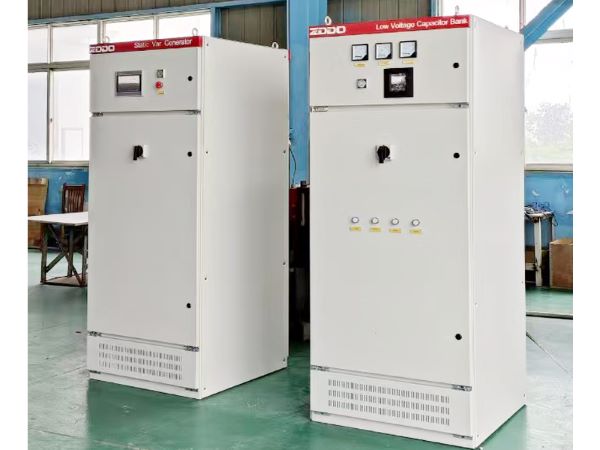
1. If your main issue is "low power factor and wanting to save on electricity bills,"
Preferred option: Capacitor Bank
Example scenario: A typical mechanical processing workshop, where the main loads consist of fans, water pumps, and machine tools, operating smoothly without any high-power equipment that requires frequent start-stop cycles.
Decision Basis: This is the most cost-effective solution. It requires minimal investment, has a short payback period, significantly improves power factor, and avoids penalties from the power utility for power factor adjustment fees.
Important note: Before installation, perform an electrical power quality test. If significant harmonics are present at the site, use a reactor to prevent capacitors from being overloaded or experiencing resonance due to harmonics.
2. If your core issue is "unstable voltage, which affects product quality"
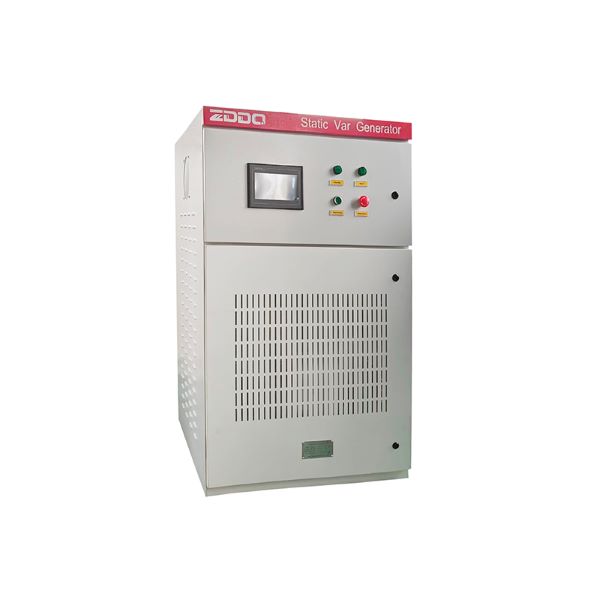
Preferred solution: SVG (Static Var Generator). Examples of application scenarios include welding workshops, rolling mills, and ports with frequent crane operations. In these environments, significant instantaneous power fluctuations in equipment can cause grid voltage to fluctuate dramatically (flashing), leading to issues such as poor welding quality and reduced dimensional accuracy of products.
Decision rationale: SVG's millisecond-level response capability instantly compensates for reactive power and stabilizes voltage, addressing the root cause of the issue. Although costly to implement, it ensures core production quality and efficiency.
In one sentence: Pay for stability.
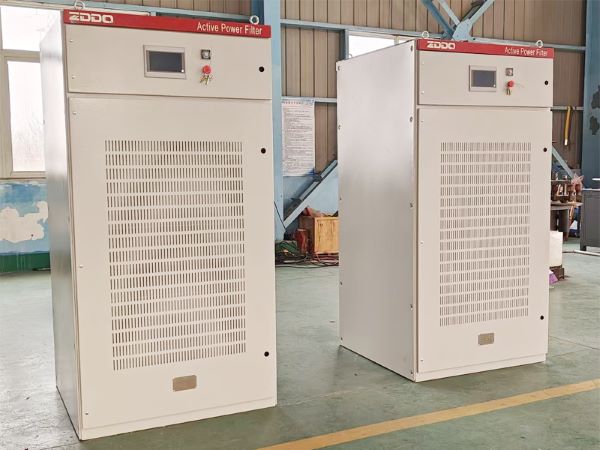
3. If your core issue is "severe harmonic distortion and equipment abnormality alarms," the preferred solution is an AHF (Active Harmonic Filter). Typical applications include data centers, semiconductor production lines, and large-scale frequency converter clusters. The substantial nonlinear loads in these environments generate significant harmonics, causing transformer overheating, cable noise, and malfunctions in precision instruments.
Decision Basis: At this stage, reactive power compensation has become a secondary requirement, while harmonic mitigation remains the primary task. The AHF serves as a specialized "harmonic physician," capable of precisely filtering out harmful harmonics.
Advanced solution: If both reactive power and severe harmonic issues exist, consider a hybrid "SVG+AHF" configuration or select an AHF device with partial reactive power compensation capability.
Summary: There is no absolute best choice for reactive power compensation devices; only the most suitable one exists.
Capacitors are a go-to solution for fundamental issues, offering cost-effectiveness.
SVG is the ultimate solution for dynamic effects— delivering instant results.
AHF serves as the "surgical tool" for addressing chronic harmonic issues, providing a professional and definitive solution.
Categories
new blog


NO.25,JINHE RD,HUAIYUAN ECONOMIC DEVELOPMENT ZONE ,BENGBU,ANHUI
Scan to WhatsApp: