What is Resonance?
In an AC circuit, electrical resonance is a condition where the inductive reactance (X_L) and capacitive reactance (X_C) become equal, canceling each other out. This leaves only the circuit resistance (R) to oppose the current.
Inductive Reactance (X_L = 2πfL): Opposition from inductors (e.g., motors, transformers). Increases with frequency.
Capacitive Reactance (X_C = 1 / (2πfC)`): Opposition from capacitors (e.g., capacitor banks for power factor correction). Decreases with frequency.
The Resonant Frequency (f_r)
This is the specific frequency where X_L = X_C. It's calculated by:
f_r = 1 / (2π√(LC))
Where L is inductance and C is capacitance.
Why is Resonance a Problem?
At the resonant frequency, the impedance of the LC circuit is at its minimum (theoretically, just the resistance R). If a voltage signal at or near this resonant frequency is present in the circuit, it will cause a very large current to flow.
This can lead to:
Overheating of components (cables, capacitors, transformers).
Voltage distortion and instability.
Nuisance tripping of circuit breakers.
Premature failure of equipment, especially capacitors.
How does Resonance Occur in Power Systems?
The most common cause is the interaction between:
Inductance (L): From the power system itself (transformers, cables, motors).
Capacitance (C): From power factor correction capacitor banks.
Modern electrical loads (VFDs, SMPS, LED lights) draw non-linear current, which generates harmonic currents (currents at integer multiples of the fundamental 50/60 Hz frequency). These harmonic currents can excite the natural resonant frequency of the system, leading to the problematic conditions described above.
What are Active Harmoinc Filter?
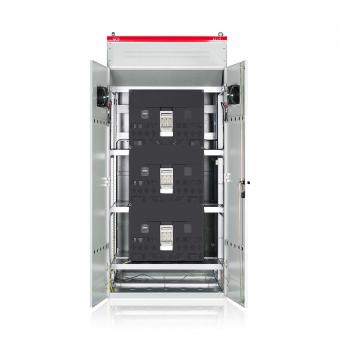
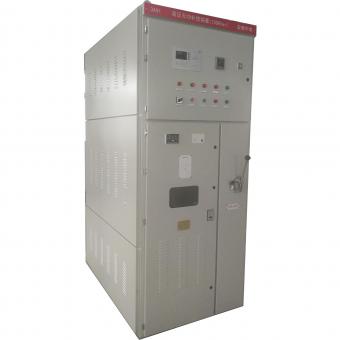
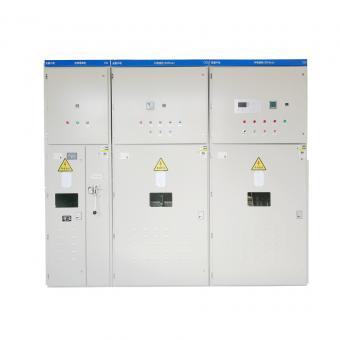
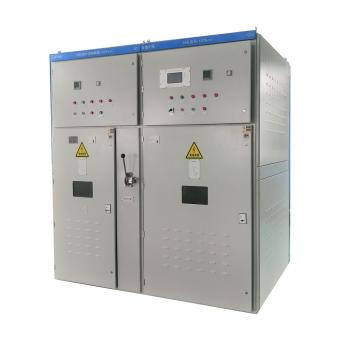
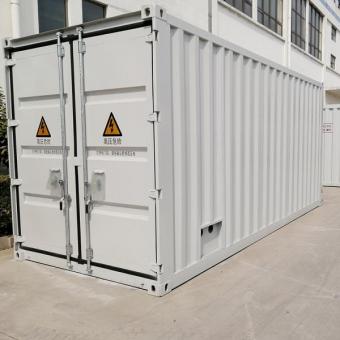
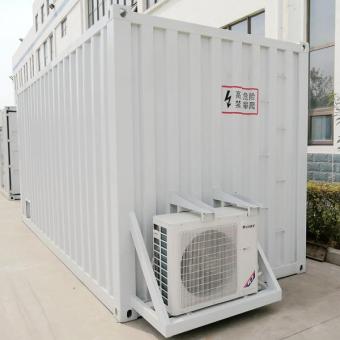
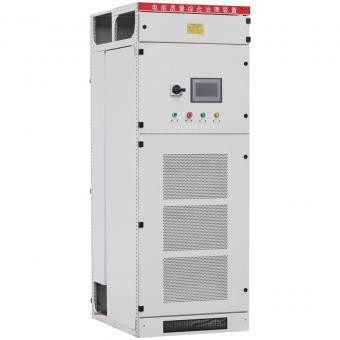
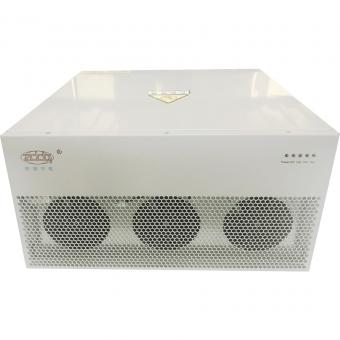
An Active Harmonic Filter is a power electronic device that is connected in parallel to the load to mitigate harmonic distortion. It actively "injects" canceling harmonic currents to counteract the harmonics generated by the non-linear load.
How do they work?
Think of it like noise-canceling headphones for your electrical system.
Measurement: The AHF uses current sensors to continuously measure the load current in real-time.
Processing: Its internal processor uses advanced algorithms (like the Fast Fourier Transform - FFT) to instantly separate the fundamental current from the harmonic currents.
Injection: The AHF then generates an inverse copy of the harmonic current waveform.
Cancellation: It injects this inverse current back into the power system. The original harmonic current and the injected canceling current are 180 degrees out of phase, effectively canceling each other out.
Key Benefits:
Dynamic Filtering: Responds in milliseconds to changing harmonic loads.
Multi-Harmonic Filtering: Can target a wide range of harmonics simultaneously (e.g., 2nd to 50th).
Additional Functions: Many modern AHFs also provide reactive power compensation (power factor correction) and load balancing.
This is the most important part. AHFs are the preferred modern solution to harmonic problems specifically because of their relationship with resonance.
The Problem with Passive Filters:
The traditional solution was passive filters (tuned LC circuits). A passive filter is a circuit tuned to a specific harmonic (e.g., 5th) to provide a low-impedance path for that harmonic current to bypass the system.
The Risk: While effective, a passive filter introduces capacitance into the system. This changes the system's L and C values, and therefore changes its resonant frequency.
If not designed perfectly, a passive filter can accidentally create a new resonant point that aligns with another existing harmonic, making the problem much worse.
The AHF Solution:
An Active Harmonic Filter does not introduce any new capacitance to the system (except for a small high-frequency filter on its output). It is a current source, not a passive impedance.
Immunity to Resonance: Because it doesn't change the system's L and C, it cannot create new resonant frequencies. Its performance is not affected by existing system resonance.
Suppression of Resonance: By injecting canceling currents, the AHF prevents harmonic currents from circulating in the system. If the harmonic currents are removed or greatly reduced, they cannot excite the system's resonant frequency, preventing resonance problems from ever occurring.
| Feature | Electrical Resonance | Active Harmonic Filter (AHF) |
|---|---|---|
| Nature | A condition or phenomenon in an RLC circuit. | A device or system for power quality improvement. |
| Cause | Interaction of system inductance and capacitance at a specific frequency. | N/A (It is a solution, not a cause). |
| Effect | Problem: High currents and voltages, equipment damage. | Solution: Reduces harmonic distortion, improves power quality. |
| Key Principle |
X_L = X_C at frequency f_r, leading to minimum impedance.
|
Injection of canceling harmonic currents. |
| Relationship | AHFs are used to prevent the harmful effects of system resonance caused by harmonics. |
Scenario: A factory has many Variable Frequency Drives (VFDs) on motors, generating 5th and 7th harmonics. They also have a capacitor bank for power factor correction.
Problem: The system inductance (transformers, cables) and the capacitor bank (C) have a natural resonant frequency near the 5th harmonic (250 Hz on a 50 Hz system). The 5th harmonic current from the VFDs excites this resonance.
Result: The capacitor bank overheats and fails repeatedly. Voltage distortion is high.
Old Solution (Risky): Install a passive trap filter tuned to the 5th harmonic. This might work but could shift resonance to the 7th harmonic, causing new problems.
Modern Solution (Safe & Effective): Install an Active Harmonic Filter. The AHF measures the 5th harmonic current from the VFDs and injects a canceling current. This eliminates the 5th harmonic current, so it can no longer excite the resonant point. The resonance still exists theoretically, but it has no "fuel" (the harmonic current) to cause a problem. The capacitor bank stops failing, and voltage distortion is reduced to acceptable levels.
In conclusion, understanding system resonance is crucial for diagnosing power quality issues, and Active Harmonic Filters are a powerful, resilient technology designed to solve these issues without the risks associated with traditional passive solutions.
Categories
new blog


NO.25,JINHE RD,HUAIYUAN ECONOMIC DEVELOPMENT ZONE ,BENGBU,ANHUI
Scan to WhatsApp: