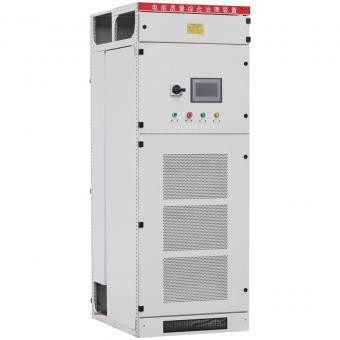
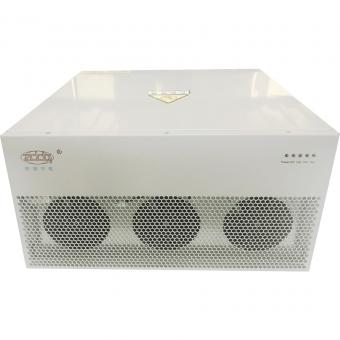
When multiple modules of an active power filter are operated in parallel, slow response and reduced filtering effectiveness are often related to imbalances in core aspects such as inter-module coordinated control, signal synchronization, and current distribution. The specific causes can be analyzed from the following aspects:
Ⅰ. Insufficient inter-module synchronization accuracy
Multiple modules in parallel require sampling synchronization, control synchronization, and pulse synchronization. Synchronization errors in any of these links can cause compensation current distortion, directly impacting response speed and filtering effectiveness:
- Sampling synchronization error: Phase differences in the grid voltage and current sampling times of each module (e.g., due to sampling circuit delays or poor sensor consistency) can cause deviations in the harmonic current commands calculated by each module. For example, if module A samples 5° ahead and module B lags 3°, the phases of the compensation current commands are misaligned. When added together, the total compensation currents will cancel each other out, resulting in insufficient compensation and requiring extended adjustment time to correct the deviation, slowing response.
- Control pulse synchronization error: Timing differences between the PWM (pulse width modulation) output pulses of each module can lead to inconsistent switching frequency components of the output current, generating additional high-frequency harmonics and worsening the grid waveform. Furthermore, pulse asynchrony can increase current fluctuations between modules, requiring additional time for the system to suppress these fluctuations, resulting in slower response.
II. Current-Sharing Control Algorithm Flaws
The core of multi-module paralleling is current balancing (distributing the output current of each module based on its capacity ratio). An improper current-sharing algorithm can lead to unbalanced current distribution between modules, impacting overall performance.
- Slow dynamic current-sharing response: When load harmonics change rapidly (such as sudden harmonics generated by impact loads), if the current-sharing algorithm's dynamic adjustment speed cannot keep up (e.g., using a static current-sharing strategy without a dynamic tracking mechanism), some modules may be overloaded while others may be underloaded. For example, if a module's output current is excessively high at the moment of current-sharing lag, triggering current-limiting protection, the total compensation current suddenly drops, failing to keep pace with harmonic changes and slowing response. - Low current sharing accuracy: If parameters such as the current sharing loop's proportional coefficient and integration time constant are improperly designed, or if differences in output impedance between modules (such as impedance variations due to varying cable lengths) are not accounted for, the currents of each module will vary significantly. For example, when 10 modules are connected in parallel, the current of one module may be 1.5 times the average value, while the current of another module may be only 0.5 times. This results in insufficient effective total compensation current, reducing
harmonic mitigation effectiveness. Current fluctuations also increase system losses, further slowing response speed.
Ⅲ. Communication Link Delay or Interference
Multiple modules in parallel require communication (such as CAN or EtherCAT) to exchange information (such as total harmonic commands, module status, and current sharing commands). Communication anomalies can directly disrupt coordinated control:
- Excessive communication delay: When harmonic frequencies are high (such as those above 250Hz), their change period is short (under 4ms). If inter-module communication delay exceeds 1ms, the compensation commands issued by the master controller will lag behind the actual harmonic changes. Each module will output current based on these outdated commands, resulting in a phase difference between the compensation current and the actual harmonics, making response speed inconsistent.
- Communication Interference: In complex electromagnetic environments like ships, communication signals are susceptible to interference from motors and inverters, leading to command transmission errors (such as misinterpretation of total harmonic current commands). For example, if a module mistakenly receives a command to "compensate 50A harmonics" as "30A," the total compensation amount will be insufficient, reducing filtering effectiveness. Furthermore, the system must correct the error through redundancy checks and retransmission mechanisms, further increasing response latency.
IV. Control Algorithms Not Adapted to Multi-Module Collaboration
Single-module control algorithms (such as PI control and repetitive control) may not be directly applicable to multiple modules in parallel. If not optimized for parallel scenarios, overall performance will deteriorate.
- Improper Command Distribution: If the master controller evenly distributes harmonic commands to each module without considering differences in module dynamic characteristics (such as slow switching speeds of power devices in a module), some modules may be unable to follow the commands, resulting in distortion of the total compensation current. For example, high-order harmonics (e.g., above the 7th order) require rapid module response. If a module responds late due to hardware limitations, its output current will experience a time lag compared to other modules, which, when combined, will increase the harmonic content of the total current.
- Failure to Suppress Inter-Module Circulation Current: When multiple modules are connected in parallel, if there are slight differences in module output voltage (such as DC voltage fluctuations or PWM modulation errors), circulating current (reactive current between modules) will occur. This circulating current consumes module capacity, reducing the current actually available for harmonic compensation. Furthermore, the controller must process the circulating current, increasing the computational load and slowing down response speed.
V. Hardware Parameter Inconsistency
If there are differences in hardware parameters (such as sensor accuracy, power device characteristics, and reactor parameters) between modules, this can lead to inconsistent module performance and affect synergy:
- Sensor Error: Different current/voltage sensor accuracies among modules (e.g., ±1% vs. ±3%) can lead to deviations in detected harmonic currents. Consequently, the compensation commands calculated based on these deviations are inconsistent, leading to distortion in the total compensation current when combined.
- Power Device Inconsistency: Power devices such as IGBTs have different switching speeds and on-state voltage drops, leading to differences in the dynamic response of module output current (e.g., a response time of 200μs for one module and 300μs for another). When harmonics change rapidly, slow-responding modules will slow down overall compensation, resulting in reduced filtering effectiveness.
The core of paralleling multiple modules is "synergy." Any factors that disrupt synchronization, current sharing accuracy, and command consistency (synchronization errors, current sharing defects, communication delays, algorithm incompatibility, hardware differences) will lead to slower response and reduced filtering effectiveness. Addressing these issues requires comprehensive improvements in synchronization mechanism optimization, dynamic current sharing algorithm adjustment, communication anti-interference design, and global optimization of control strategies.