The Variable Frequency Drive (VFD) is a powerhouse of modern industry, enabling precise motor control and dramatic energy savings. Yet, this efficiency comes with a hidden electrical toll: harmonic distortion. The Active Harmonic Filter (AHF) is the critical solution that neutralizes this threat, ensuring system reliability and clean power.
The Harmonic Challenge from VFDs
A VFD's operation—converting AC power to DC and then back to variable-frequency AC—is inherently non-linear. Its input rectifier draws current in sharp pulses, injecting harmonic currents back into the power systems. These harmonics are not just noise; they have real consequences:
Overheating Equipment: They increase losses in transformers, cables, and motors, shortening their lifespan.
Voltage Distortion: They distort the voltage supply, causing malfunctions in sensitive devices like PLCs and sensors.
Resonance Risk: They can excite dangerous resonances with power factor correction capacitors, leading to potential failures.
Financial Cost: Utilities often levy penalties for poor power factor and excessive harmonic pollution fed back to the grid.
How the Active Harmonic Filter Works
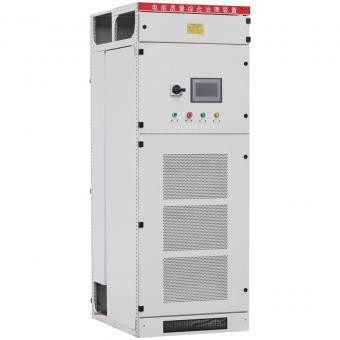
The AHF is a dynamic, intelligent device. It operates on a real-time cycle of Measure, Analyze, and filtering:
Why the VFD and AHF Partnership is Essential
Pairing an AHF with a VFD system transforms it from a source of disruption into a model of clean power:
The Variable Frequency Drive delivers unparalleled control and efficiency. To fully realize these benefits without compromising electrical system health, the Active Harmonic Filter is an essential component. Together, they form a complete, robust, and future-proof solution for intelligent motor control and sustainable industrial operation. Investing in an AHF is investing in the longevity, reliability, and efficiency of your entire power system.
Categories


NO.25,JINHE RD,HUAIYUAN ECONOMIC DEVELOPMENT ZONE ,BENGBU,ANHUI
Scan to WhatsApp: