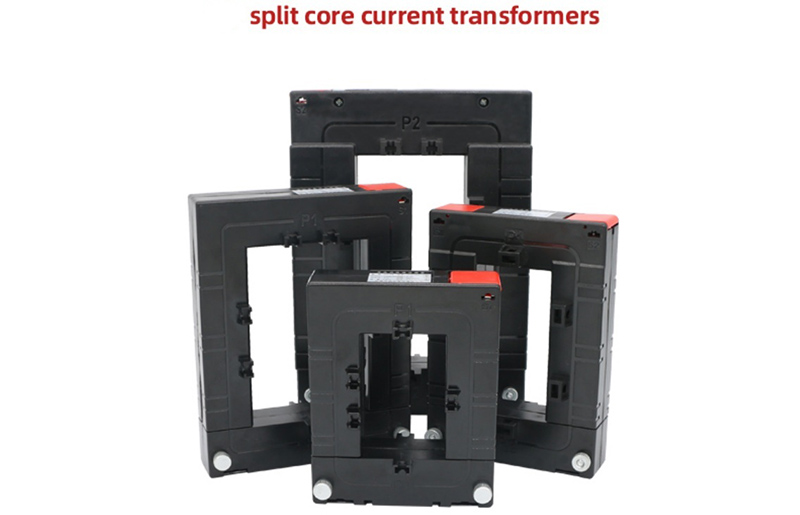
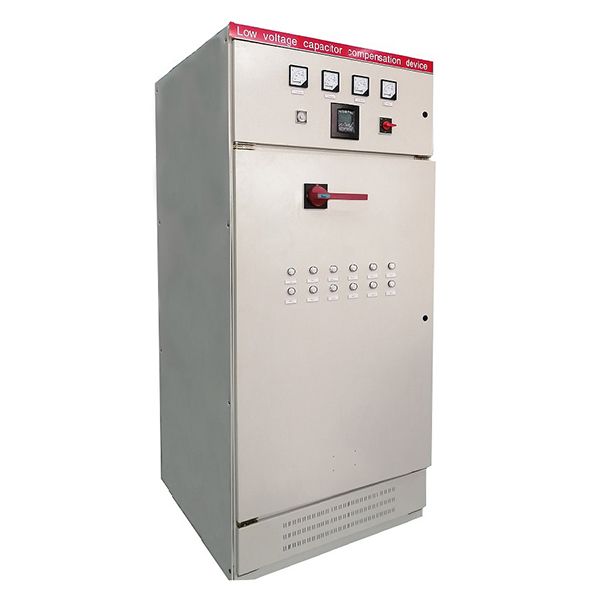
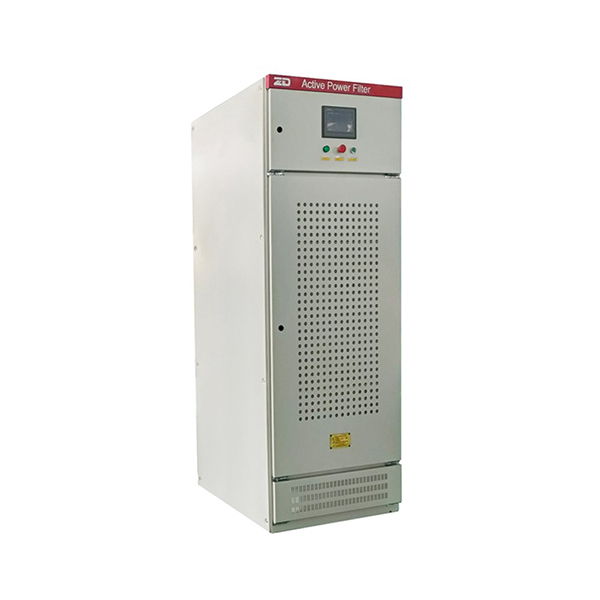
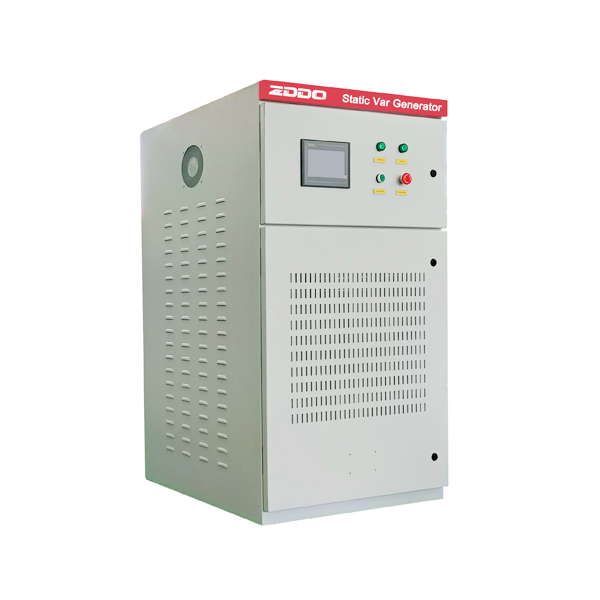
The following details how to correctly select these components, covering both general principles and specific considerations for different equipment.
I. Core General Principles (All three must be )
These principles are fundamental to ensuring accurate and reliable CT measurement signals.
1. CT Ratio Selection:
Basis: The rated primary current of the CT should be greater than or equal to the maximum long-term operating current of the measured line (usually 1.2 to 1.5 times the rated current of the transformer), with a certain margin.
Calculation Reference: For the transformer output side, the commonly used formula is I = Transformer Capacity (kVA) / (1.732 * System Voltage kV).
Recommendation: The selected standard CT ratio should ensure that the normal load current of the line is approximately 60% to 80% of the CT secondary output current. This provides measurement margin during load fluctuations and ensures high accuracy.
2. Accuracy Class Selection:
Core Requirement: A measurement CT with an accuracy class of 0.5 or higher (e.g., 0.2S class) must be used.
Reason: The core controller of the compensation/filtering device relies on the CT signal for rapid calculation. Excessive phase and amplitude errors in low-precision (e.g., class 1, 3) or protection-class (10P10, etc.) CTs can cause the controller to misinterpret the system state, resulting in incorrect compensations, and in severe cases, even oscillations or malfunctions.
3. Phase Displacement Requirements:
Crucial: For devices like SVG and APF that rely on instantaneous reactive power theory and instantaneous current vector control, the phase error of the CT must be as small as possible.
Standard: Typically, under the same load, the phase difference between multiple CTs should be less than 0.5°, or even 0.2°.
Implementation: Select a high-precision "S" class CT (e.g., 0.2S, 0.5S). "S" grade indicates that accuracy and phase requirements are met over a wide current range (1% to 120% of rated current), making it particularly suitable for applications with large load fluctuations.
4. Rated Burden and Conductor Matching:
The secondary rated load (VA value) of the CT must be greater than or equal to the sum of the actual connected conductor resistance, contact resistance, and the sampling circuit impedance of the device.
Connection Cable: Shielded twisted-pair cable ≥2.5 mm² must be used to reduce interference and voltage drop.
Wiring Method: Connect directly one-to-one to the corresponding sampling port of the compensation/filtering device. It is strictly forbidden to share cables with other measuring or protection instruments in series to avoid mutual interference and increased load.
5. Installation Direction and Consistency:
Direction: The installation direction of all CTs (P1 towards the power grid side, P2 towards the load side) must be consistent.
Consistency: Within the same system, especially for multiple CTs used in the same compensation device, products from the same manufacturer, batch, and model should be selected as much as possible to ensure maximum consistency in characteristics.
II. Special Considerations for Different Equipment
While adhering to general principles, the three types of equipment each have their own focus:
The control of capacitor banks is relatively simple, mainly based on power factor or reactive power switching.
Key Points: Accuracy and stability.
Turnover Ratio: Can be selected according to general principles, relatively lenient.
Accuracy: At least 0.5 class, 0.5S class recommended.
Phase: The phase consistency requirement is lower than that of SVG and APF, but a certain level of accuracy is still required to prevent misjudgment of over-compensation or under-compensation.
Special Points: For capacitor banks with phase-by-phase compensation, an independent current transformer (CT) must be installed for each phase. For three-phase common compensation, usually only one CT needs to be installed on phase A or all three phases (depending on the controller model).
2. Active Power Filter (APF)
APFs need to detect the harmonic current of the load in real time and generate a current of equal magnitude but opposite direction to cancel it out. This places extremely high demands on the dynamic response and phase consistency of the CT.
Key Points: High-frequency characteristics, fast response, and extremely low phase difference.
Bandwidth Requirements: The CT's measurement bandwidth must cover the highest harmonic that the APF needs to compensate for. Typically, the APF compensates up to the 50th harmonic (2500Hz), therefore the CT's bandwidth should not be lower than this frequency. Ordinary power frequency measurement CTs may not meet this requirement.
Response Time: A CT with a short response time (usually <1ms) should be selected to ensure the APF can quickly track harmonic changes.
Phase Consistency: This is the most critical requirement. The phase error between the three-phase CTs must be very small (<0.5°), otherwise the APF will overcompensate in one phase and undercompensate in another, resulting in a "harmonic shift" phenomenon, or even amplifying harmonics.
Recommendation: Prioritize wideband, high-precision measurement CTs specifically designed for APFs. Some APF manufacturers specify or provide dedicated CTs.
3. Static Var Generator (SVG)
The SVG needs to detect the system's reactive current (and potentially active current) in real time and perform dynamic compensation. Its CT requirements are between those of a capacitor bank and an APF, but closer to those of an APF.
Key Points: Dynamic accuracy and phase accuracy.
Response Speed: The CT needs to quickly follow changes in system reactive power; therefore, it should have excellent dynamic characteristics.
Phase Accuracy: Similar to APF, phase error affects the accuracy of reactive current calculation, leading to poor compensation or additional active power losses.
Full Current Measurement: SVG typically requires measuring the combined current of the fundamental frequency and a certain range of harmonics; therefore, the CT also needs a certain bandwidth.
Recommendation: Use a high-precision measurement CT with a accuracy of 0.2S or 0.5S, and ensure high consistency in three-phase characteristics.