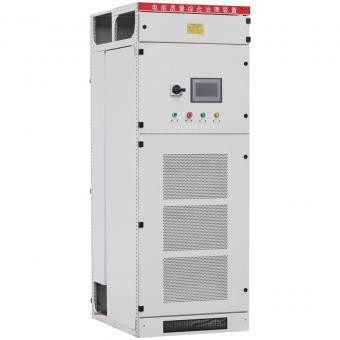
2. Meeting Marine Harmonic Regulations: Ships must comply with relevant regulations. For example, ships classified by Bureau Veritas require a total harmonic distortion (THD) of no more than 8%. Taking a fully revolving floating crane as an example, its DC drive produces high harmonic content. This can be centrally controlled by installing an active filter on the 690V voltage bus. This control reduces the total harmonic content to less than 8%, meeting regulatory requirements.
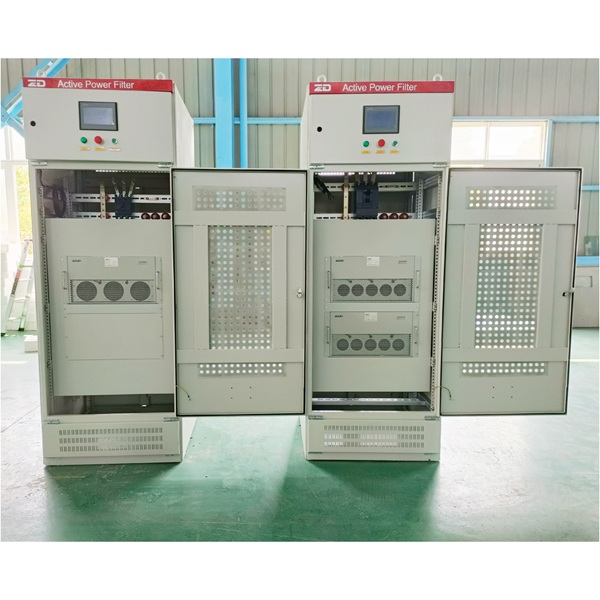
3. Ensuring the stability of electric propulsion systems: Luxury cruise ships, icebreakers, and other vessels are increasingly adopting AC drive-based electric propulsion. The variable frequency speed regulation of AC propulsion motors generates a large amount of harmonics, reducing the efficiency of the ship's power generation, transmission, and consumption equipment, and also impacting relay protection, power measurement, and communications equipment. Active power filters provide dynamic compensation, simultaneously compensating for harmonics and reactive power. The filter characteristics are unaffected by system impedance, eliminating the risk of resonance with the system impedance and ensuring stable operation of the electric propulsion system.
4. Reducing the impact of shore power harmonics: When a ship is connected to shore power in port, an active harmonic filter can be installed on the secondary side of the ship's connection to shore power to prevent the onboard load from impacting the integrity of the shore power grid. For example, a study on a certain ship showed that by installing an active filter, the total harmonic distortion can be reduced by 90%, improving system efficiency and performance.
Categories


NO.25,JINHE RD,HUAIYUAN ECONOMIC DEVELOPMENT ZONE ,BENGBU,ANHUI
Scan to WhatsApp: